
Google’s New SAFE Spam Detector: What the September 2026 Spam Update Means for Marketers Using AI

Magnifying glass resting on a stack of plain documents in soft grayscale, illustrating Google's SAFE AI forensic spam investigation system

If you publish content with AI assistance and at this point, who in marketing doesn’t Google just raised the stakes. On September 24, 2026, Google began rolling out its September 2026 spam update, the fourth spam update of the year. In the same news cycle, Google Research revealed a new system called SAFE: the Scaled Abuse Forensics Examiner, an AI-powered forensic team that investigates coordinated networks of AI-generated spam.

The headline you’ll see everywhere is “Google is cracking down on AI content.” That’s the wrong takeaway and acting on it could lead you to the wrong decisions. SAFE doesn’t hunt AI-written content. It hunts shortcuts. Here’s what actually happened, what SAFE really is, and what it means for your content strategy.

What happened: the facts first

Let’s separate what’s confirmed from what’s speculation, because this story has plenty of both.

On September 24, 2026, at about 9:15 a.m. Pacific, Google kicked off its September 2026 spam update. It covers every country and language, and Google says the rollout may take up to two weeks to complete so expect ranking volatility through early October.

This is the fourth spam update of 2026, following updates in March, June, and August. That makes 2026 the most active year for Google spam updates since 2021. For comparison, Google ran three spam updates in 2024 and just one in each of 2023 and 2025.

Separately, Google Research published a paper titled The Synthetic Gap: Automating Forensic Investigation of “AI Slop” with the Scaled Abuse Forensics Examiner (SAFE).

Now the speculation line: the paper’s circulation among SEO professionals coincided with the update’s launch, and many commentators have linked the two. But Google has not confirmed any connection between SAFE and the September spam update, and has not said the update specifically targets AI-generated content. Keep that in mind as you read the hot takes including this one.

What SAFE actually is

SAFE stands for Scaled Abuse Forensics Examiner. It is not a simple “AI detector” that scans your page for robotic phrasing. Google’s paper describes a multi-agent forensic investigation system essentially an automated team that investigates the way a human forensic reviewer would.

The paper identifies four specialized AI agents, each with a distinct job:



Minimal grayscale diagram of four simple geometric shapes connected in a flow, representing Google's SAFE four-agent investigation system

1. Root Agent the orchestrator


This agent runs the investigation. It assigns tasks to the specialist agents, reviews their findings, and reaches a final verdict from the combined evidence.


2. Content Understanding Agent


This one analyzes content for signs of synthetic abuse and policy violations. It works in two modes: a LoRA-adapted model that catches known violations, and a few-shot-trained LLM that catches what the paper calls “spirit of policy” violations content that doesn’t match any existing rule but still violates the intent of the policy.


3. Behavior Understanding Agent


This agent looks for coordination rather than normal human activity. It examines timing patterns across channels burst publishing schedules, synchronized uploads, fake engagement signals anything that doesn’t look like organic human behavior.


4. Channel Cluster Understanding Agent


This is the network mapper. Using a graph-based system, it identifies relationships across content producers shared infrastructure, shared signals to surface an entire coordinated operation rather than treating each account or page as an isolated case.


The paper confirms SAFE has been deployed, reporting that it “significantly accelerates the identification of novel synthetic threats, reducing forensic investigation time compared to human-in-the-loop workflows.” Notably, the paper is only three pages long, publishes no test results, and withholds the methodology details you’d normally expect an unusually secretive posture that tells you how seriously Google takes this capability.


SAFE is also Google’s second AI-spam system disclosed this year. The first, the Scalable Cluster Termination System (S-CTS), reportedly terminated 50,000 clusters comprising 130,000 channels generating synthetic spam over six months of operation.


What SAFE is not the distinction that matters


Here’s the part most coverage gets wrong. SAFE doesn’t punish you for using AI. It punishes you for faking what AI can’t give you: expertise, authenticity, and a real human presence.


Google’s own spam policy draws the line clearly. “Scaled content abuse” means generating many pages for the primary purpose of manipulating search rankings “no matter how it’s created.” The examples include using generative AI tools to generate many pages “without adding value for users.” The policy targets bulk, low-value publishing, whether a person or a tool created it. (See Google Search Central’s spam policies.)


The “spirit of policy” concept is the real escalation. For years, spam enforcement mostly matched known patterns: dodge the pattern, slip through. SAFE is built to catch content that evades the letter of the rules while violating their intent. The loophole era is over.


Why marketers should care


The detection model has moved from the page level to the network level. SAFE evaluates content, behavior, and producer infrastructure together, and that has practical implications for anyone running a content operation:


Volume plus velocity is a signal. AI lets a small operation publish at a scale that previously required a content farm. Burst publishing and synchronized uploads across properties look like coordination to a behavior agent.


Templates are a signal. Templated content structures spread across multiple sites the classic programmatic playbook are exactly what cluster-level analysis is designed to surface.


Each page can “pass” and you can still get flagged. The paper’s framing is explicit: individual pieces may not be duplicative enough to trip classic filters, but similar behavioral patterns across a network invite forensic investigation. Passing a standalone quality check is no longer the whole game.


None of this means AI-assisted publishing is dead. It means the industrialized version of it thousands of thin pages with no editorial value is now under a microscope that can reason about intent.


What to do: a practical checklist


  1.  
    1. Keep a human in the loop. AI drafts are fine; publishing them unreviewed at scale is not. Edit, verify claims, and add original data and experience before anything goes live.
    1. Publish on a human cadence. Avoid synchronized bursts of templated content across multiple properties.
    1. Don’t run networks of thin sites. Shared infrastructure plus templated content across properties is precisely the cluster pattern SAFE maps.
    1. Add what AI can’t fake. Original research, real data, quotes from real people, genuine experience. This is both the ethical answer and the algorithmic one.
    1. Monitor, don’t panic. The September update runs through early October. Watch Search Console for sudden drops, but don’t start panic-rewriting mid-rollout these updates take up to two weeks to complete.
    1. Noindex what shouldn’t rank. Google’s own guidance: if you’re hosting scaled low-value content, exclude it from search rather than letting it drag the whole domain down.



Hands reviewing a laptop at a clean desk in soft grayscale, illustrating a marketer reviewing AI-generated content

Quick answers

Does Google penalize AI-generated content?
No. It penalizes scaled content abuse regardless of how the content was created.

Is SAFE behind the September 2026 spam update?
Google hasn’t confirmed any link. The timing coincided, but treat the connection as speculation.

Will SAFE flag my site if I use AI to draft posts?
Not by itself. SAFE investigates coordinated networks and behavioral patterns not individual AI-assisted pages with real editorial value.

How many spam updates has Google run in 2026?
Four: March, June, August, and September the most since 2021.

The real lesson

Google just told us, in a research paper, that it now judges the spirit of the law, not just the letter. The operators who spent years asking “how do I avoid the pattern?” are playing a game that’s over. The question that matters now is simpler and harder: is this content genuinely useful, published by a real operation, at a human scale?

For marketers doing honest work one site, real expertise, AI as an assistant rather than a printing press SAFE is good news. It clears the field of competitors who were winning on volume alone. Do the work, keep a human in the loop, and let the detective squad chase the actual criminals.

Sources: Search Engine Journal’s coverage of the SAFE paper; TechWyse’s breakdown of SAFE and the September 2026 spam update; Google Search Central’s spam policies; Semrush’s coverage of Google’s S-CTS research; Big Voodoo’s analysis.
Google Is Moving Search Ads Into AI Answers: And That Changes Everything for Marketers

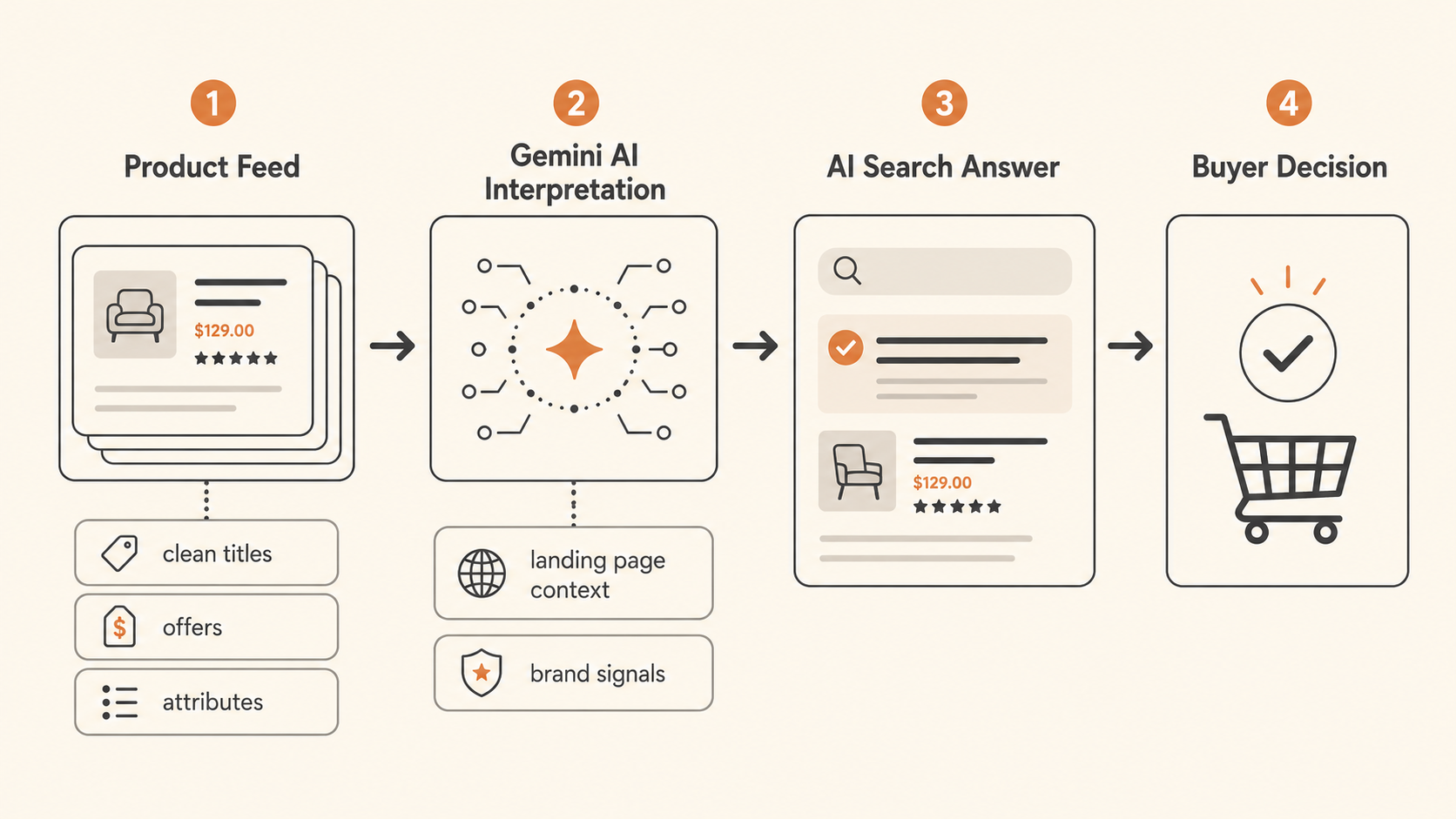
work flow

Google Is Moving Search Ads Into AI Answers — And That Changes Everything for Marketers

For a long time, search ads were simple to understand.

A user typed something into Google.

Google showed a few ads at the top.

The user clicked one of them.

The advertiser paid for that click.

That was the basic model.

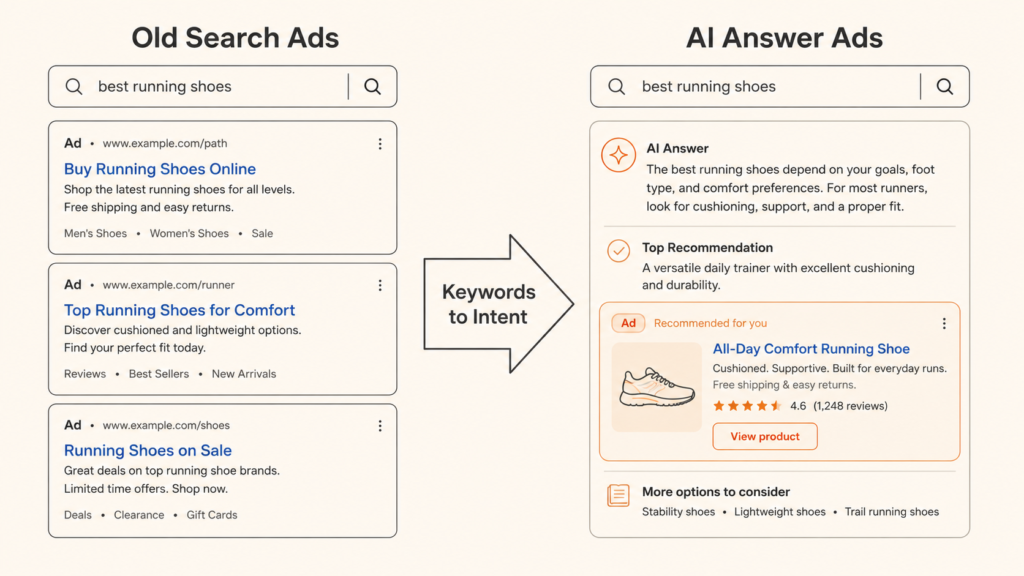
But now Google is changing the place where ads appear and the way those ads are created. With AI becoming part of Search, ads are no longer limited to blue links, headlines, and descriptions. Google is slowly moving ads inside AI-generated answers.

That may sound like a small product update, but for marketers, this is a major shift.

Because if the user’s decision is happening inside the AI answer, then the ad also needs to live inside that answer.

Why Google Is Changing Search Ads?

At Google Marketing Live, Google introduced new AI-powered ad experiences built around Gemini. These updates show how Google wants paid search to work in an AI-first search experience.

Instead of only showing a traditional search ad with a fixed headline, Gemini can understand the user’s query, interpret the intent, and help generate more relevant ad responses. This means the ad may feel less like a separate ad unit and more like part of the answer experience.

That changes the role of the advertiser.

Earlier, advertisers mainly focused on writing better headlines, stronger descriptions, and cleaner landing pages. Those things still matter, but they may not be enough anymore.

Now, Google’s AI needs the right product data, business information, offers, feed quality, landing page context, and brand signals to create a useful ad response.

In simple words, Google is not just asking advertisers to write better ads.

It is asking them to feed the machine better information.

The Product Feed Is Becoming More Important

This is where many advertisers may struggle.

If AI is going to build or shape ad responses, it needs strong raw material. That raw material comes from product feeds, Merchant Center data, business profiles, website content, campaign assets, and structured information.

A clean product feed can help AI understand what the brand sells, who the product is for, what makes it different, and when it should appear.

A weak product feed does the opposite.

If product titles are messy, attributes are missing, images are poor, pricing is unclear, or offers are not updated, then the AI has less useful information to work with.

That creates a bigger gap between well-managed accounts and neglected accounts.

This is not only a technical issue. It is a marketing strategy issue.

Because in an AI-powered ad system, the brand with better data may get better visibility, better relevance, and better conversion opportunities.

The New Job of the Marketer

This shift changes what performance marketers need to focus on.

Earlier, a lot of search advertising work was about keywords, match types, bids, ad copy, and landing pages. Those are still part of the system, but AI is pushing marketers toward a different type of work.

The new job is to make sure the AI understands the business correctly.

That means marketers need to think about:

What information are we giving Google?

Is our product feed clean?

Are our offers clear?

Is our landing page explaining the product properly?

Are our assets strong enough for AI to use?

Are we giving the system the right guardrails?

This is where marketing analytics and campaign structure become more important. If the data going into the system is weak, the output will also be weak.

AI does not magically fix poor inputs.

It usually exposes them.

Why Advertisers Are Nervous

Advertisers are nervous because this shift gives Google more control over how ads are shown and explained.

In the old model, the advertiser had more direct control over the headline, description, keyword targeting, and landing page message.

In the new AI-driven model, Google may play a larger role in interpreting the query and shaping the ad response.

That creates a trust issue.

Advertisers will want to know:

Is the AI explaining my product correctly?

Is it making claims I did not approve?

Is it showing my offer in the right context?

Is it prioritizing Google’s automation over my brand strategy?

Is performance improving because of better relevance, or because we are giving up more control?

These are not small questions.

When AI becomes part of ad delivery, the advertiser is not only buying media. They are also trusting the platform to represent the brand correctly.

That is why this update matters.

Meta’s Growth Adds More Pressure

The bigger story is not only about Google.

Meta is also growing fast in advertising, and forecasts suggest Meta could overtake Google in digital ad revenue. That shows how much the advertising market is shifting.

For years, Google was the default anchor for many ad budgets because search captured high-intent users. If someone searched for a product or service, they were already close to making a decision.

But Meta has become stronger at using AI to find buyers before they search.

That creates a different type of competition.

Google is trying to protect the decision moment inside Search.

Meta is trying to influence the buyer before that moment happens.

That is why Google moving ads into AI answers makes sense. If the search experience is becoming conversational, Google cannot let ads remain stuck in the old search format.

The ad has to move closer to the answer.

What Brands Should Do Now

Brands should not panic, but they should not ignore this either.

The first step is to audit the quality of their data.

Product feeds, landing pages, creative assets, business descriptions, pricing, inventory, and offers need to be accurate and complete. If Google’s AI is going to use this information to create or support ad experiences, then messy data becomes a direct performance problem.

The second step is to think beyond ad copy.

The future of search ads may not be about who writes the cleverest headline. It may be about who gives the AI the clearest product information, strongest proof points, and most useful business context.

The third step is to monitor how AI-powered ad experiences represent the brand.

If AI is generating explanations, advertisers need to review whether those explanations match the brand’s positioning, offer, and customer promise.

This is where marketers need both creativity and control.

AI can help scale advertising, but brands still need to decide what they want to be known for.

Representation

My Perspective

As someone interested in marketing analytics and performance marketing, I think this shift is bigger than a normal Google Ads update.

It shows that paid search is moving from keyword targeting to intent interpretation.

That means marketers cannot only think about campaigns at the ad level. They need to think about the entire information system behind the campaign.

The feed matters.

The landing page matters.

The product data matters.

The brand positioning matters.

The campaign structure matters.

The quality of measurement matters.

AI may create faster ad experiences, but it still depends on the strength of the inputs. If the business gives weak information, the AI will not magically create a strong strategy.

This is also where smaller brands need to be careful. Large brands may have cleaner feeds, better assets, stronger websites, and more historical data. Smaller brands may fall behind if they treat AI ads like a plug-and-play feature.

The marketers who win in this new environment will not be the ones who simply “turn on AI.”

They will be the ones who know how to prepare the data, guide the system, and judge whether the output actually supports the business goal.

Final Takeaway

Google moving search ads into AI answers is not just a format change.

It changes the relationship between search, ads, and decision-making.

The user may no longer move from search query to ad to website in the same old way. The decision may start inside an AI-generated answer, where the platform explains, recommends, compares, and guides the user.

That means advertisers need to rethink what visibility means.

Being present in search may no longer be enough.

Brands need to be understood correctly by the AI layer.

They need clean data, clear offers, strong product information, and better control over how their business is represented.

Search advertising is not disappearing.

But the old version of search ads is being rebuilt.

And for marketers, the next competitive advantage may not be writing the best ad headline.

It may be feeding the AI the best possible version of your business.

Reader Question:

If Google’s AI starts shaping how ads are written, explained, and placed inside search answers, will advertisers gain better performance  or lose too much control over their brand message?

When AI Search Gets It Wrong: Why Google’s AI Overview Is Now a Brand-Safety Risk

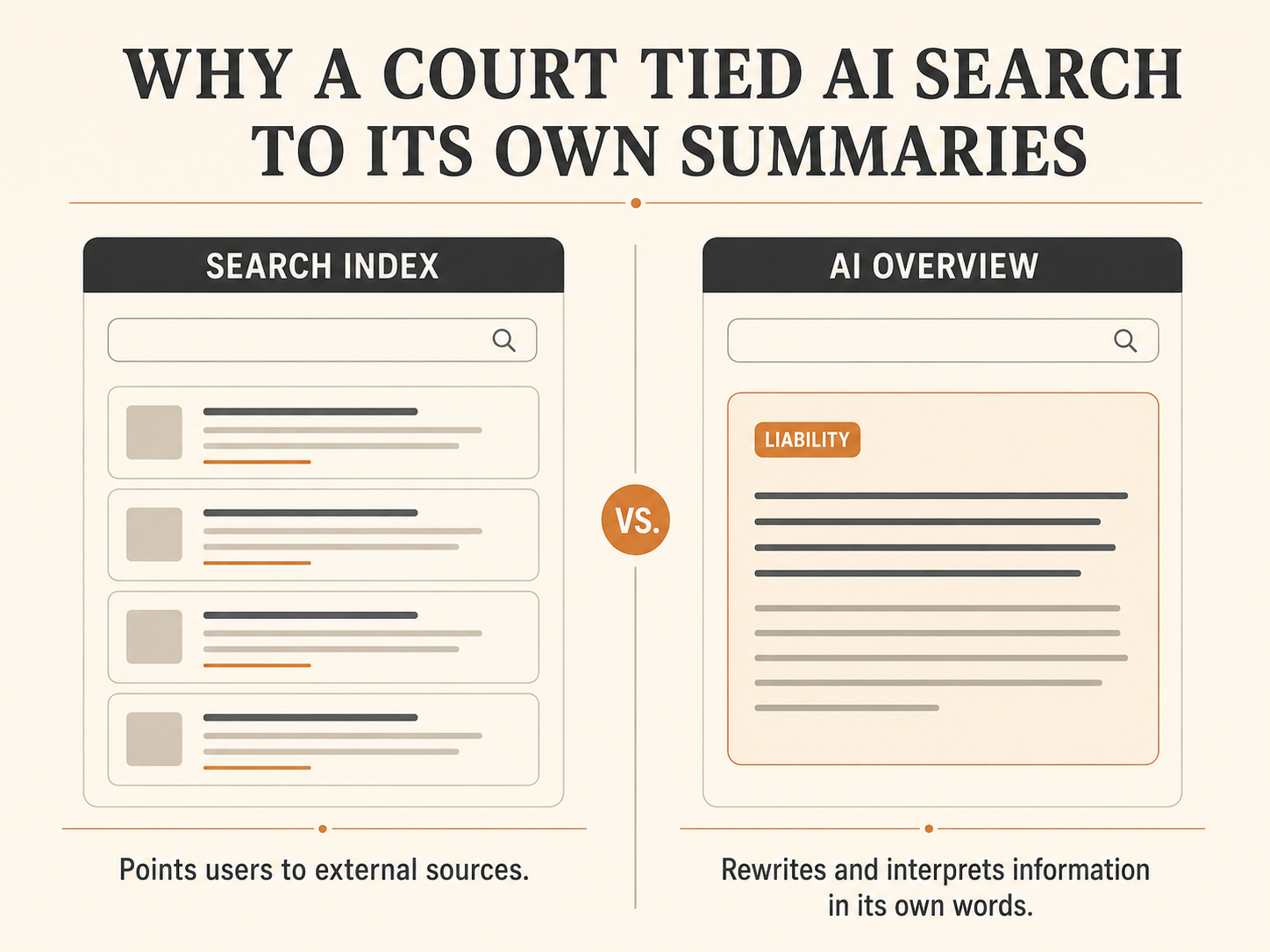
Court Representation

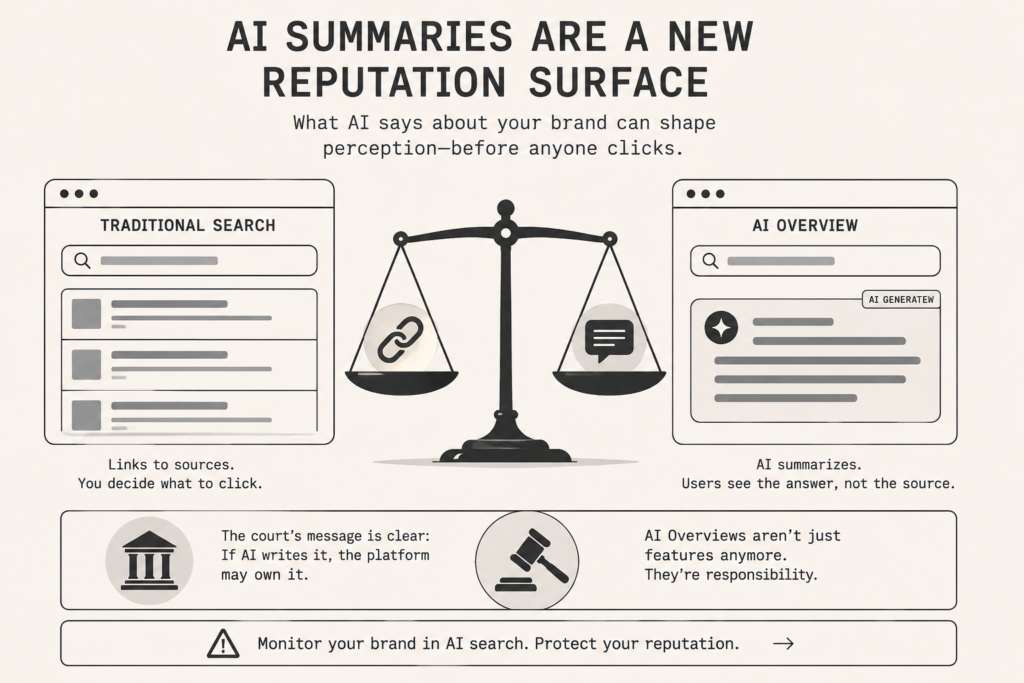
AI Search Is No Longer Neutral: What Brands Should Learn from Google’s Court Case

AI Search Is Now a Brand-Safety Problem, Not Just an SEO Problem

For years, brands worried about what people said about them on Google.

Bad reviews. Negative articles. Reddit threads. Competitor comparisons. Old complaints that kept ranking.

But now the problem is changing.

It is no longer only about what websites say about your brand. It is also about what Google’s AI says after reading those websites, summarizing them, and presenting the answer directly to users.

That shift matters because AI search does not behave like traditional search. A normal Google result points users toward a list of sources. An AI Overview does something more powerful. It reads, rewrites, summarizes, and gives users a direct answer in Google’s own interface.

That sounds useful when the answer is accurate.

But when the answer is wrong, it becomes a brand reputation problem.


Graphical representation

A recent court decision in Germany shows why this matters.

A German Court Just Sent a Warning to AI Search Platforms

A regional court in Munich reportedly ruled that Google can be held responsible when its AI Overview makes false claims about a brand.

The issue involved two Munich publishing companies. Google’s AI Overview had connected them to scams and “subscription traps,” even though the cited sources did not support those claims.

That detail is important.

The problem was not simply that Google showed a bad search result. The problem was that Google’s AI layer created a summary that appeared to make its own judgment. It did not just send users to another website. It interpreted the information and presented the result as an answer.

That is where the legal and marketing issue begins.

Traditional search has always been built around links. Google could say it was indexing the web and helping users find information. But AI Overviews work differently. They do not only index information. They convert information into a finished response.

For brands, that changes the risk.

If an AI summary says something false about your business, many users may never click through to check the original sources. They may simply trust the answer because it appears directly inside Google.

That makes the AI summary itself a new reputation surface.

Why This Is Bigger Than a Legal Story

At first, this might look like a legal case about one court, one country, and one AI Overview.

But the bigger lesson is about how brand visibility is changing.

In the old search world, brands mainly cared about rankings. If your website ranked well, you had visibility. If negative content ranked above you, you had a reputation problem. If your competitors outranked you, you had an SEO problem.

Now, ranking is only part of the story.

AI search creates another layer between the user and the web. That layer decides what to summarize, what to ignore, what to connect, and what to present as the final answer.

That means brands are no longer competing only for search rankings. They are competing for how AI systems understand them.

This is a major shift for marketers.

A brand could have strong SEO, good website content, and positive press coverage, but still be misrepresented by an AI-generated summary. The user may never see the full source. They may only see the AI answer.

That creates a new question for every business:

What does AI believe about your brand?

AI Overviews Are Becoming a Reputation Surface

Every brand already has reputation surfaces.

Your website is one.

Your Google Business Profile is one.

Your reviews are one.

Your social media presence is one.

Your Reddit mentions, press articles, YouTube videos, and third-party listings are all part of the public picture.

Now AI Overviews need to be added to that list.

The difference is that brands cannot directly edit AI Overviews the way they can edit their website or Google Business Profile. The AI summary is generated from a mix of sources, signals, and context that the brand does not fully control.

That makes it harder to manage.

If your website has outdated information, you can update it.

If your landing page has weak copy, you can rewrite it.

If your ad campaign has poor messaging, you can pause it.

But if an AI Overview creates a false or misleading summary, the path to fixing it is less clear.

That is why this court decision matters. It suggests that when AI search platforms generate their own summaries, they may also carry responsibility for what those summaries say.

For brands, that creates both a risk and a possible protection.

Why Marketers Should Care

This is not only a legal issue. It is a marketing operations issue.

Marketers already monitor rankings, traffic, conversions, reviews, social mentions, and campaign performance. AI search monitoring may now need to become part of that same system.

If your brand appears in AI Overviews, you need to know what is being said.

Search your brand name.

Search your brand name with words like scam, lawsuit, complaints, pricing, refund, reviews, problems, and alternatives.

Do the same for your top products, services, executives, and competitors.

This is not paranoia. It is reputation hygiene.

The danger is not only that AI gets something wrong. The danger is that the wrong answer appears confident, polished, and official enough for users to believe it.

That is what makes AI-generated misinformation more serious than a random bad comment online.

A bad comment looks like a comment.

A bad AI summary can look like an answer.

The New Brand-Safety Checklist

Brands should start treating AI search as part of brand safety.

That means creating a simple monitoring process.

First, check how your brand appears in AI Overviews.

Second, document anything false, misleading, or unsupported.

Third, take screenshots with dates.

Fourth, compare the AI answer with the sources it claims to use.

Fifth, update your own website content if your public information is unclear, incomplete, or outdated.

Sixth, build stronger third-party signals through credible articles, profiles, case studies, and structured content.

This does not mean every company needs a massive AI search team. But it does mean companies need a habit.

The brands that ignore this will find out late.

The brands that monitor early will understand how AI systems are interpreting them before it becomes a larger reputation issue.


My Perspective:

From a marketing analytics and performance marketing perspective, this case shows that visibility is no longer just about clicks.

For a long time, marketers measured search mainly through rankings, impressions, CTR, and organic traffic. Those metrics still matter, but they do not fully explain what is happening in AI search.

If a user reads an AI Overview and never clicks, the brand may still be influenced positively or negatively.

That means the impact happens before the website visit.

This is where traditional analytics becomes weaker. GA4 may show fewer visits. Search Console may show impressions and clicks. But neither tool fully explains how AI summaries are shaping perception before the click.

That is why marketers need to think beyond traffic.

The question is not only, “Did the user visit our site?”

The better question is, “What did the user learn about us before deciding whether to click?”

That is the new search reality.

Final Takeaway:

The German court case is a signal of where AI search is heading.

AI Overviews are not just search features. They are becoming public-facing brand narratives. They summarize companies, judge context, and influence what users believe.

For brands, this creates a new responsibility: monitor how AI describes you.

For platforms, it creates a new pressure: if the AI writes the answer, the platform may not be able to hide behind the idea that it only showed users a link.

Search is no longer just about being found.

It is about being understood correctly.

And in an AI-driven search world, that may become one of the biggest brand-safety challenges marketers have to manage.

Reader Question:

If Google’s AI gives a false summary about a brand, who should be responsible  the platform, the original sources, or the brand for not monitoring it early enough?

Maximize Efficiency: How One AI Tool Can Replace Your Marketing Stack

clarity vs complexity

Maximize Efficiency: How One AI Tool Can Replace Your Marketing Stack

In the fast-paced world of e-commerce, efficiency is not just a luxury; it’s a necessity. Many sellers find themselves juggling several tools, each fulfilling a specific need, but collectively adding to their workload and expenses. With the advent of advanced AI technologies, there’s a transformative opportunity for businesses to streamline operations and reduce costs. This blog explores how an all-in-one AI solution can take over the functions of multiple tools, enhancing efficiency and profitability for e-commerce sellers.

The current landscape of digital marketing requires businesses to be agile and responsive. As competition intensifies, the need for a robust strategy that integrates various functions market analysis, listing optimization, and performance tracking is crucial. Enter StoreClaw, a pioneering AI engine that promises not just to simplify operations, but to empower sellers with the insights and automation they need to thrive in a competitive marketplace.

By leveraging AI, businesses can not only save on costs but also gain a significant advantage in performance marketing. In this blog, we’ll delve into the core benefits of utilizing a single AI platform and why now is the perfect time to embrace this change.


The Challenge of Multiple Tools in E-Commerce

Managing an e-commerce store often involves using multiple tools for different tasks market research, SEO optimization, social media marketing, inventory management, and more. Each tool comes with its own learning curve, subscription costs, and maintenance challenges. This fragmentation can lead to inefficiencies and missed opportunities. For instance, a seller might spend hours compiling data from various platforms, only to find that the insights they gather are outdated or incomplete.

Moreover, the cost of maintaining multiple subscriptions can add up quickly, often running into hundreds of dollars each month. This financial burden can be particularly detrimental for small businesses and startups that are already operating on tight margins. The complexity of managing several tools can also hinder agility, making it difficult for sellers to respond swiftly to market changes or consumer demands.

Adopting an all-in-one AI solution like StoreClaw addresses these challenges head-on. By consolidating multiple functionalities into a single platform, e-commerce sellers can streamline their operations, reduce costs, and free up valuable time to focus on strategic growth.

.

The Power of Automation in Marketing

Automation

One of the most compelling benefits of using a unified AI tool is the automation of repetitive tasks. StoreClaw operates continuously in the background, monitoring competitors, optimizing product listings, and automating marketing campaigns without the seller needing to intervene constantly. This level of automation not only saves time but also ensures that critical marketing tasks are executed consistently and accurately.

For example, imagine having an AI that automatically adjusts your product listings based on competitor analysis and market trends. Instead of manually researching and updating listings, the AI does this in real time, ensuring that your products are always competitively positioned. This proactive approach can significantly enhance visibility and sales.

Furthermore, automation allows for data-driven decision-making. With StoreClaw’s analytics, sellers can receive instant insights into their performance metrics, allowing them to adjust strategies promptly. This capability is crucial in a rapidly changing market, where agility can mean the difference between success and failure.

Enhancing Data-Driven Decisions with AI Insights

data driven dashboard

In today’s marketing landscape, data is king. However, the challenge lies in effectively analyzing and utilizing that data. StoreClaw provides comprehensive analytics that empower sellers to make informed decisions. By integrating data from various sources, the AI generates actionable insights that help in understanding consumer behavior, market trends, and overall performance.

For instance, the AI can highlight which products are underperforming and suggest optimizations or promotional strategies to boost their visibility. Additionally, it can analyze customer interactions and feedback, allowing for tailored marketing strategies that resonate more deeply with target audiences.

This depth of insight is often unattainable with traditional tools that operate in isolation. By harnessing the collective power of data, sellers can refine their strategies, enhance customer engagement, and ultimately drive growth.

.

Cost Efficiency and Scalability

One of the primary concerns for e-commerce sellers is cost efficiency. As mentioned earlier, relying on multiple tools can quickly lead to rising expenses. StoreClaw eliminates the need for several subscriptions, allowing businesses to save money while still accessing a broad range of functionalities. This is particularly advantageous for startups and smaller businesses, where every dollar counts.

Moreover, as your business grows, the AI’s scalability becomes a significant advantage. Unlike traditional tools that may require additional fees or new subscriptions as you expand, StoreClaw can adapt seamlessly to your increasing needs. This means that as your e-commerce operations grow whether you’re adding new products, entering new markets, or increasing your marketing efforts you can do so without the hassle of managing multiple platforms.

The combination of cost savings and scalability not only enhances profitability but also provides a solid foundation for sustained business growth.

Real-World Applications and Success Stories

While the theoretical benefits of an all-in-one AI solution are compelling, real-world applications underscore its effectiveness. Numerous e-commerce businesses have reported significant improvements in their operational efficiency and profitability after switching to a single AI platform.

For example, businesses that have integrated StoreClaw have found that their time spent on marketing tasks has decreased by over 50%. This efficiency has allowed them to focus on expanding their product lines and enhancing customer service. Additionally, these businesses have noted a marked increase in sales due to better-optimized listings and proactive marketing campaigns.

Furthermore, the ability to quickly adapt to market changes, thanks to AI-driven insights, has become a game-changer for many sellers. By staying ahead of trends and adjusting strategies in real-time, businesses are not only surviving but thriving in a competitive landscape.

MY PERSPECTIVE:

As someone deeply entrenched in marketing analytics and performance marketing, I’ve witnessed firsthand the transformative power of AI in the e-commerce sector. The shift towards an all-in-one AI solution is not just a trend; it’s a strategic movement that can redefine how businesses operate. Marketers, agencies, and brands must embrace this change to remain competitive.

The ability to automate tasks, glean actionable insights, and operate cost-effectively is essential in today’s digital marketplace. I encourage marketers to evaluate their current toolsets critically. Are they overpaying for functionalities that could be seamlessly integrated into a single platform? The future of marketing lies in leveraging technology to drive efficiency and growth.

FINAL TAKEAWAY: In conclusion, the rise of AI solutions like StoreClaw signifies a pivotal moment for e-commerce sellers. By consolidating various marketing tools into one autonomous engine, businesses can enhance their efficiency, reduce costs, and empower data-driven decision-making. As the market continues to evolve, those who leverage AI effectively will not only survive but thrive.

Now is the time to assess your current marketing strategies and consider how an all-in-one AI tool can revolutionize your approach. Embracing this technology is not just about keeping pace with competitors; it’s about leading the charge towards a more efficient and profitable future.


Harnessing AI for Marketing Success: Lessons from the Latest Innovations

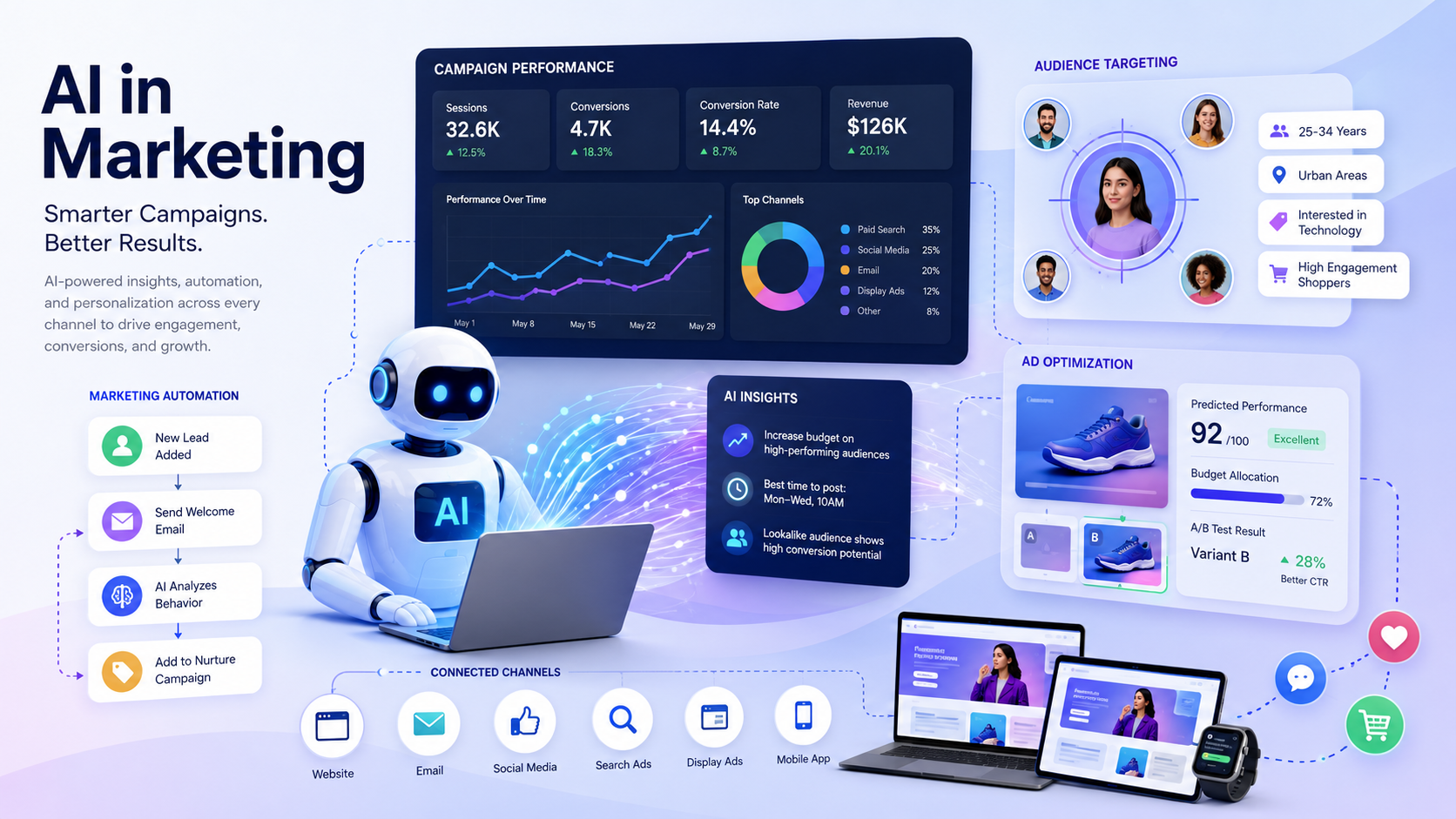
AI in marketing

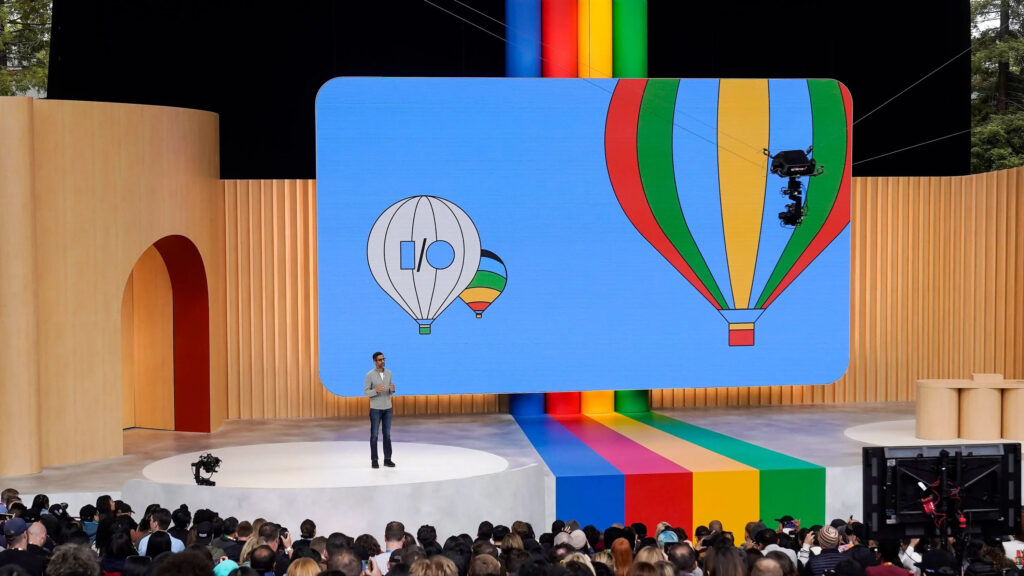
In the rapidly evolving landscape of marketing, the integration of artificial intelligence (AI) is reshaping strategies and redefining success metrics for brands. With major industry events like Google I/O and Google Marketing Live on the horizon, marketers are keenly aware that the next few days could fundamentally alter how AI is leveraged in search and advertising. The excitement surrounding these updates underscores the importance of adapting to technological advancements that are not just novelties but essential tools for driving business growth.

As AI continues to permeate various facets of marketing, brands must navigate the complexities of implementation and optimization. The recent developments from key players such as Google and Netflix demonstrate that the future of advertising is not only about deploying AI tools but also about ensuring they work effectively within existing frameworks and provide tangible results. This blog will explore the implications of these innovations and how they can inform strategic marketing decisions moving forward.


Google’s anticipated announcements during its I/O event signify a potential shift in how brands approach search engine optimization (SEO) and online visibility. With updates expected around AI Mode in Search and new advertising products linked to Gemini and YouTube, marketers must be prepared to adapt their strategies. The introduction of AI-driven features may change the landscape of organic traffic, pushing brands to rethink their approach to content creation and search visibility.


For marketers, this means staying informed and agile. As AI becomes a default operating mode for search, brands that prioritize high-quality content and user experience will likely see better engagement and visibility. The implications extend beyond mere visibility; they signal a need for deeper consumer understanding and the ability to respond swiftly to changes in search algorithms and user behavior. Building a proactive content strategy that anticipates these changes will be crucial for maintaining a competitive edge.

Netflix is pioneering the use of AI agents to manage and optimize its advertising campaigns, marking a significant evolution in how media buying is approached. By leveraging AI to automate ad management, Netflix can enhance its ad offerings, ensuring that they are not just a means of revenue generation but also a tool for providing personalized viewer experiences. This shift highlights the growing necessity for marketers to embrace automation and AI analytics in their advertising strategies.


The adaptation of AI in ad management allows for real-time optimization based on viewer data, which can significantly improve ad performance. For marketers, this means rethinking how they design campaigns. Instead of static ad placements, there is an opportunity to create dynamic ads that adapt to viewer preferences and behaviors. The challenge lies in integrating these AI capabilities into existing marketing frameworks while ensuring that creative strategies remain at the forefront of campaign development.

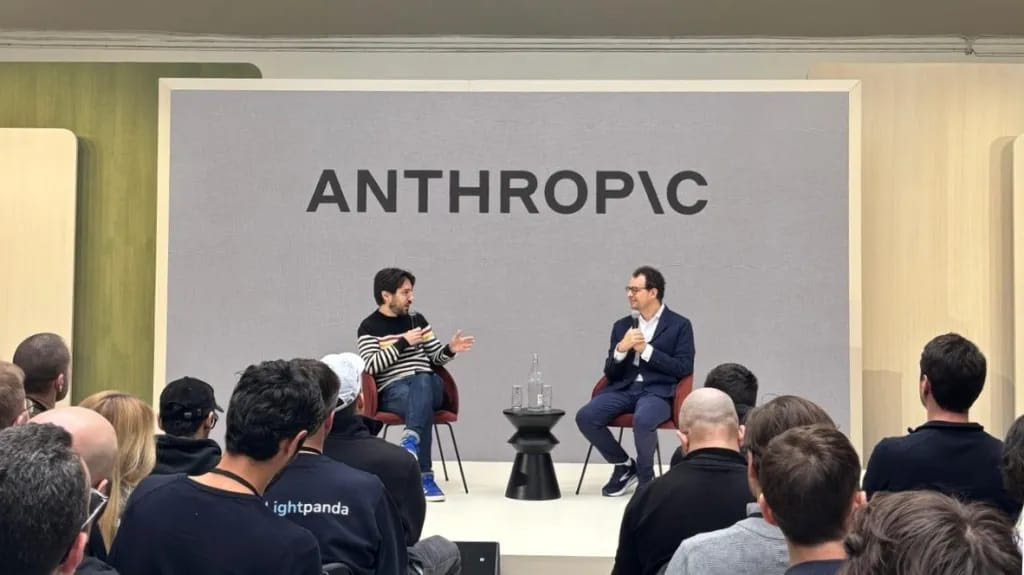
Anthropic’s recent advancements in enterprise AI have positioned it as a key player in the marketing technology landscape, outpacing competitors like OpenAI. This shift in enterprise AI adoption reflects a broader trend where businesses are increasingly investing in AI to enhance operational efficiency and marketing effectiveness. The rapid growth of AI tools designed for enterprise use underscores the need for marketers to be adept in both technology and strategy.


The implications for marketers are profound. As enterprise AI solutions become more prevalent, the ability to integrate these tools into marketing workflows will define future success. Marketers must prioritize understanding how AI can streamline processes such as customer segmentation, predictive analytics, and content personalization. The focus should be on creating a synergistic relationship between technology and marketing strategies to drive business outcomes.

Learning from Domino’s Radical Marketing Strategy

Domino’s has become a case study in how transparency and technology can transform a brand’s image and drive growth. By openly addressing customer criticisms and involving them in the rebranding process, Domino’s not only repaired its reputation but also established a loyal customer base. The use of technology to enhance customer experience—through seamless ordering channels and a user-friendly loyalty program, demonstrates the importance of adaptability in marketing.


For marketers, the lessons from Domino’s are clear: embrace transparency, leverage technology, and create meaningful customer engagement. Brands that can identify weaknesses and proactively address them through innovative solutions will foster trust and loyalty. This approach not only improves customer relationships but also drives long-term growth by turning customers into advocates for the brand.

The Future of Marketing: Integrating AI for Sustainable Growth

As AI continues to evolve, its integration into marketing strategies will be essential for sustainable growth. The recent innovations from industry leaders illustrate that the future is not just about adopting new technologies but also about understanding their implications for consumer behavior and brand engagement. Marketers must cultivate a mindset that values data-driven decision-making and agility in the face of rapid technological change.


Additionally, brands should focus on building first-party data assets through innovative campaigns that tie engagement to loyalty programs. By creating pathways for consumers to become active participants in brand narratives, marketers can enhance customer lifetime value and create more robust relationships.

From my perspective as a marketing professional focused on analytics, performance marketing, and brand strategy, the integration of AI into marketing frameworks is not merely a trend; it is a necessity. Marketers, agencies, and businesses must prioritize understanding how to leverage these technologies to enhance decision-making and optimize performance. The lessons learned from recent innovations provide a roadmap for navigating this complex landscape, emphasizing the importance of agility, transparency, and customer-centric strategies. Every marketer should view AI as an ally in their quest for consumer insights and operational efficiency, ensuring that they are positioned to thrive in an increasingly competitive environment.

FINAL TAKEAWAY:

The convergence of AI and marketing is set to redefine the industry in profound ways. As demonstrated by the advancements from Google, Netflix, Anthropic, and Domino’s, the future of marketing lies in the ability to adapt to new technologies while maintaining a strong focus on consumer engagement and brand loyalty. Marketers who embrace these changes and integrate AI thoughtfully into their strategies will not only enhance their effectiveness but also establish themselves as leaders in the digital marketing landscape. The time to act is now; the future of marketing is upon us, and those who are prepared will reap the rewards.

How do you think AI will change the way brands engage with consumers in the next few years?

From AI Income Engines to India’s Hallyu Phenomenon: Unlocking Digital and Cultural Trends!

walk way

From AI Income Engines to India’s Hallyu Phenomenon: Unlocking Digital and Cultural Trends!

My introduction to Korean culture began with my sister’s BTS and Blackpink playlists. I never jumped on the K-drama bandwagon until I saw When Life Gives You Tangerines. Its storytelling and visuals won me over instantly. Now I’m deep into Reply 1988, and I’m hooked!

Though I was late to Korean TV, I’ve always been a fan of the food. Nissin noodles, spicy Buldak ramen, and Knorr’s Korean soups are staples. Just yesterday I spotted giant billboards promoting McDonald’s and Burger King’s Korean menus proof the craze is everywhere.

From music and dramas to beauty trends, fashion, food, and language, Korean culture is weaving into daily life worldwide. In India, the Hallyu wave started quietly in the Northeast where cultural ties to East Asia made K-pop and K-dramas feel familiar. But with the rise of affordable smartphones and data after 2010, the phenomenon spread to metros and beyond.


Key moments fueled the surge:

  • PSY’s “Gangnam Style” in 2012 shattered language barriers and introduced K-pop globally.

  • The pandemic lockdowns gave everyone time to binge Korean content, with Netflix championing shows like Squid Game.

  • Local streaming platforms (MX Player, ZEE5) began offering dubbed and subtitled K-dramas.

  • Fan-driven Instagram pages and online communities turned Korean culture into something personal and aspirational.

How Hallyu Is Reshaping Indian Markets

Fashion & Beauty

  • Terms like “glass skin,” “double cleansing,” and “snail mucin” are now part of mainstream Indian skincare.

  • E-commerce sites (Nykaa, Amazon, Tira) dedicate entire sections to K-beauty, often tailoring products for local needs.

  • Korean streetwear oversized layers, bucket hats, preppy styles has infiltrated Gen Z wardrobes, influencing India’s fashion influencers.

Food & Beverage

  • Korean cuisine has exploded beyond niche restaurants: you’ll find local QSRs serving Korean fried chicken and cloud kitchens delivering ramen in Tier II and III cities.

  • Instant Korean noodles line supermarket aisles; bubble tea chains are popping up nationwide.

  • Indian brands have even launched “K-flavored” snacks and sauces to ride the wave.

Language & Education

  • Learning Korean is booming on platforms like Duolingo, and universities now offer it as an elective.

  • Indian YouTubers teach Korean with cultural context, turning language study into a fan-driven experience.

Retail & Merchandising

  • Dedicated K-pop and K-drama merchandise photo cards, plushies, posters has gone mainstream on Amazon, Flipkart, and Meesho.

  • Licensed character lines (LINE Friends, BT21) harness fan loyalty and introduce fresh visual styles.

Experiential & Community Marketing

  • Fans crave real-world connection: events like Rang De Korea draw huge crowds, and themed restaurants like Delhi’s Kori’s offer immersive photo booths that spread brand awareness organically.


Success Stories

Nykaa’s K-Beauty Launch
Nykaa’s dedicated K-beauty store skyrocketed Korean brand sales by 2.5× in 2024   bringing The Face Shop, Innisfree, Laneige, and more into Indian shoppers’ carts. Their educational content and expert demos convinced consumers that K-beauty was here to stay.

Quench Botanics: Localizing K-Beauty
Quench Botanics blends Korean skincare principles with formulas made for Indian skin and climate. By partnering with influencers, spotlighting ingredients, and pricing thoughtfully, they’ve turned global trends into homegrown success.

GOPIZZA & Boba Bhai: Korean Flavors for Indian Streets

  • GOPIZZA offers speedy, personal-size Korean-style pizzas for urban lifestyles.

  • Boba Bhai surprised Shark Tank India with their bubble tea and Korean-inspired burgers, capturing the hearts of India’s 14 million K-pop fans with vegan options and inventive desserts.

These brands prove that when businesses adapt Hallyu’s spirit mixing authenticity, speed, and localized flair they can tap into a cultural movement that’s only growing stronger.

Integration of Artificial Intelligence in Personalized Marketing.​

food brands

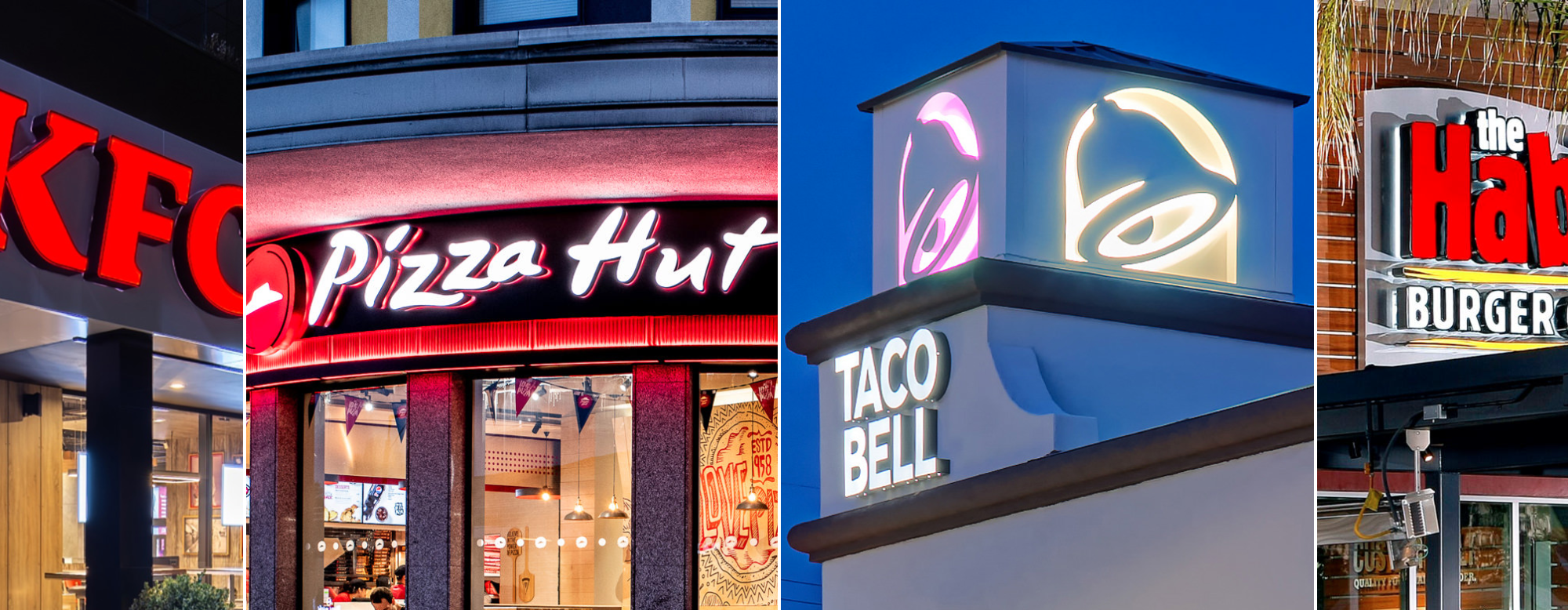
Companies are increasingly leveraging AI to enhance customer engagement through personalized marketing campaigns. For instance, Yum Brands, the parent company of Taco Bell, Pizza Hut, and KFC, has reported significant improvements in customer engagement and purchases by utilizing AI-driven personalized marketing. Their approach includes delivering customized emails tailored to individual preferences, resulting in double-digit increases in engagement compared to traditional methods.

Adoption of AI and Data-Driven Strategies in Advertising.

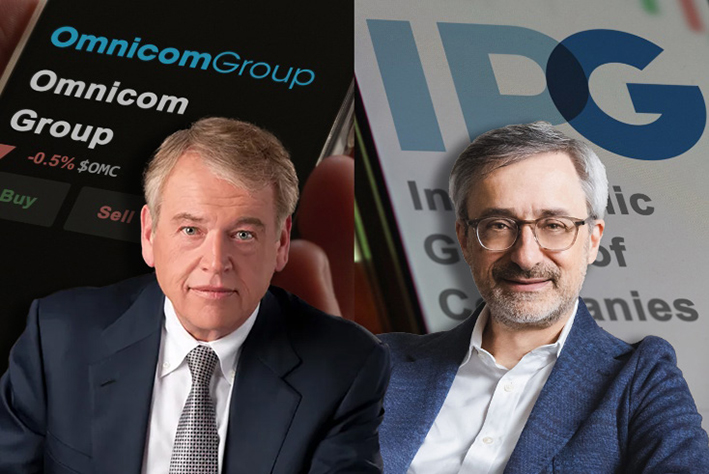
The advertising industry is undergoing a significant transformation with the integration of data analytics and AI. A notable example is the $30 billion merger between Omnicom Group and Interpublic Group, aiming to create the world’s largest advertising business focused on data and AI-driven strategies. This shift emphasizes personalized and efficient ad creation, challenging traditional creative approaches and highlighting the growing importance of technological innovation in marketing.

Utilizing Social Media Features for Enhanced Customer Engagement.

Brands are exploring new social media tools to connect with their audiences more effectively. During fashion events, companies like Moda Operandi have utilized Instagram’s broadcast channels to provide real-time insider coverage, attracting thousands of followers. This strategy offers exclusive content, conducts polls, gathers customer feedback, and fosters a sense of community among audiences, thereby enhancing customer engagement and loyalty.

The Future of Social Media: Generative AI Automation

women and blue screen

Generative AI for Automating Social Media Posts

Hi there! Welcome to Tech Nick Marketing's latest edition!

We highlight a fascinating advancement in digital marketing in this issue: Automated Social Media Posts using Generative AI.

The need for effective content development has increased as companies work to have an active social media presence. With the help of generative AI technologies, marketers can now automate their social media posts, increasing creativity and saving time. This is a detailed tutorial on automating the publication of material on social networking sites.

Step 1: Select the Appropriate AI Tool

Choose a generative AI tool based on your requirements. Among the well-liked choices are:

Using the URL of your website and the topics you designate, Narrato AI Content Genie creates social media posts automatically. Every week, it may generate 20–25 pieces of content, replete with photographs and hashtags.

SocialBee: Provides an AI post generator that generates interesting content for several networks, making scheduling and publishing simple.

FeedHive: To maximize interaction, this technology not only creates content but also forecasts performance.

Step 2: Establish Your Content Plan

Describe your content plan before you start automating. Think about the following:

Who is the target audience that you are attempting to reach? Make sure your content speaks to them.

Content Types: Select the proportion of engagement-driven, instructional, and promotional articles.

Decide how frequently you would like to post. When it comes to social media marketing, consistency is crucial.

Step 3: Enter Your Settings

After deciding on a tool and formulating your plan, enter the required information:

Themes or Topics: Indicate the primary themes or subjects you wish to discuss in your postings.

Brand Voice: Make sure the AI can recognize the tone of your brand, whether it’s amusing, informal, or professional.

Visuals and Hashtags: A lot of programs have the ability to automatically provide pertinent photos and hashtags.

Step 4: Produce Content

Make use of the AI tool to create your content. Before posting, you may preview and change the material on the majority of sites. This is an important phase since it guarantees that the final product will be consistent with the identity of your brand.

Step 5: Arrange Your Content

Utilize the scheduling function of the tool of your choice after your postings are complete. By establishing distinct timings for every post to go live, you can maximize interaction by taking advantage of your audience’s peak activity.

Step 6: Observe and Modify

Use the platform’s statistics to track the effectiveness of your posts after they go live. Keep an eye out for engagement indicators like comments, shares, and favorites. Make future content plans better with the help of this data.