


If you publish content with AI assistance and at this point, who in marketing doesn’t Google just raised the stakes. On September 24, 2026, Google began rolling out its September 2026 spam update, the fourth spam update of the year. In the same news cycle, Google Research revealed a new system called SAFE: the Scaled Abuse Forensics Examiner, an AI-powered forensic team that investigates coordinated networks of AI-generated spam.
The headline you’ll see everywhere is “Google is cracking down on AI content.” That’s the wrong takeaway and acting on it could lead you to the wrong decisions. SAFE doesn’t hunt AI-written content. It hunts shortcuts. Here’s what actually happened, what SAFE really is, and what it means for your content strategy.
What happened: the facts first
Let’s separate what’s confirmed from what’s speculation, because this story has plenty of both.
On September 24, 2026, at about 9:15 a.m. Pacific, Google kicked off its September 2026 spam update. It covers every country and language, and Google says the rollout may take up to two weeks to complete so expect ranking volatility through early October.
This is the fourth spam update of 2026, following updates in March, June, and August. That makes 2026 the most active year for Google spam updates since 2021. For comparison, Google ran three spam updates in 2024 and just one in each of 2023 and 2025.
Separately, Google Research published a paper titled The Synthetic Gap: Automating Forensic Investigation of “AI Slop” with the Scaled Abuse Forensics Examiner (SAFE).
Now the speculation line: the paper’s circulation among SEO professionals coincided with the update’s launch, and many commentators have linked the two. But Google has not confirmed any connection between SAFE and the September spam update, and has not said the update specifically targets AI-generated content. Keep that in mind as you read the hot takes including this one.
What SAFE actually is
SAFE stands for Scaled Abuse Forensics Examiner. It is not a simple “AI detector” that scans your page for robotic phrasing. Google’s paper describes a multi-agent forensic investigation system essentially an automated team that investigates the way a human forensic reviewer would.
The paper identifies four specialized AI agents, each with a distinct job:
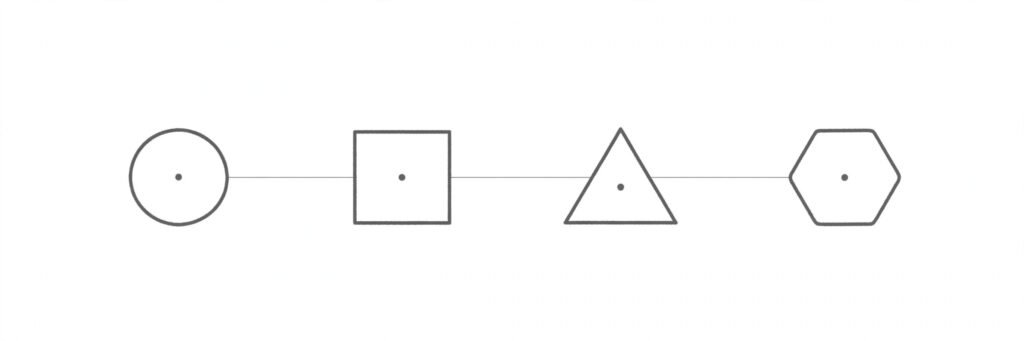
1. Root Agent the orchestrator
This agent runs the investigation. It assigns tasks to the specialist agents, reviews their findings, and reaches a final verdict from the combined evidence.
2. Content Understanding Agent
This one analyzes content for signs of synthetic abuse and policy violations. It works in two modes: a LoRA-adapted model that catches known violations, and a few-shot-trained LLM that catches what the paper calls “spirit of policy” violations content that doesn’t match any existing rule but still violates the intent of the policy.
3. Behavior Understanding Agent
This agent looks for coordination rather than normal human activity. It examines timing patterns across channels burst publishing schedules, synchronized uploads, fake engagement signals anything that doesn’t look like organic human behavior.
4. Channel Cluster Understanding Agent
This is the network mapper. Using a graph-based system, it identifies relationships across content producers shared infrastructure, shared signals to surface an entire coordinated operation rather than treating each account or page as an isolated case.
The paper confirms SAFE has been deployed, reporting that it “significantly accelerates the identification of novel synthetic threats, reducing forensic investigation time compared to human-in-the-loop workflows.” Notably, the paper is only three pages long, publishes no test results, and withholds the methodology details you’d normally expect an unusually secretive posture that tells you how seriously Google takes this capability.
SAFE is also Google’s second AI-spam system disclosed this year. The first, the Scalable Cluster Termination System (S-CTS), reportedly terminated 50,000 clusters comprising 130,000 channels generating synthetic spam over six months of operation.
What SAFE is not the distinction that matters
Here’s the part most coverage gets wrong. SAFE doesn’t punish you for using AI. It punishes you for faking what AI can’t give you: expertise, authenticity, and a real human presence.
Google’s own spam policy draws the line clearly. “Scaled content abuse” means generating many pages for the primary purpose of manipulating search rankings “no matter how it’s created.” The examples include using generative AI tools to generate many pages “without adding value for users.” The policy targets bulk, low-value publishing, whether a person or a tool created it. (See Google Search Central’s spam policies.)
The “spirit of policy” concept is the real escalation. For years, spam enforcement mostly matched known patterns: dodge the pattern, slip through. SAFE is built to catch content that evades the letter of the rules while violating their intent. The loophole era is over.
Why marketers should care
The detection model has moved from the page level to the network level. SAFE evaluates content, behavior, and producer infrastructure together, and that has practical implications for anyone running a content operation:
Volume plus velocity is a signal. AI lets a small operation publish at a scale that previously required a content farm. Burst publishing and synchronized uploads across properties look like coordination to a behavior agent.
Templates are a signal. Templated content structures spread across multiple sites the classic programmatic playbook are exactly what cluster-level analysis is designed to surface.
Each page can “pass” and you can still get flagged. The paper’s framing is explicit: individual pieces may not be duplicative enough to trip classic filters, but similar behavioral patterns across a network invite forensic investigation. Passing a standalone quality check is no longer the whole game.
None of this means AI-assisted publishing is dead. It means the industrialized version of it thousands of thin pages with no editorial value is now under a microscope that can reason about intent.
What to do: a practical checklist
-
- Keep a human in the loop. AI drafts are fine; publishing them unreviewed at scale is not. Edit, verify claims, and add original data and experience before anything goes live.
-
- Publish on a human cadence. Avoid synchronized bursts of templated content across multiple properties.
-
- Don’t run networks of thin sites. Shared infrastructure plus templated content across properties is precisely the cluster pattern SAFE maps.
-
- Add what AI can’t fake. Original research, real data, quotes from real people, genuine experience. This is both the ethical answer and the algorithmic one.
-
- Monitor, don’t panic. The September update runs through early October. Watch Search Console for sudden drops, but don’t start panic-rewriting mid-rollout these updates take up to two weeks to complete.
-
- Noindex what shouldn’t rank. Google’s own guidance: if you’re hosting scaled low-value content, exclude it from search rather than letting it drag the whole domain down.

Quick answers
Does Google penalize AI-generated content?
No. It penalizes scaled content abuse regardless of how the content was created.
Is SAFE behind the September 2026 spam update?
Google hasn’t confirmed any link. The timing coincided, but treat the connection as speculation.
Will SAFE flag my site if I use AI to draft posts?
Not by itself. SAFE investigates coordinated networks and behavioral patterns not individual AI-assisted pages with real editorial value.
How many spam updates has Google run in 2026?
Four: March, June, August, and September the most since 2021.
The real lesson
Google just told us, in a research paper, that it now judges the spirit of the law, not just the letter. The operators who spent years asking “how do I avoid the pattern?” are playing a game that’s over. The question that matters now is simpler and harder: is this content genuinely useful, published by a real operation, at a human scale?
For marketers doing honest work one site, real expertise, AI as an assistant rather than a printing press SAFE is good news. It clears the field of competitors who were winning on volume alone. Do the work, keep a human in the loop, and let the detective squad chase the actual criminals.
Sources: Search Engine Journal’s coverage of the SAFE paper; TechWyse’s breakdown of SAFE and the September 2026 spam update; Google Search Central’s spam policies; Semrush’s coverage of Google’s S-CTS research; Big Voodoo’s analysis.