
Mastering Hyperparameters: Tuning Your Models for Business Impact!

person viewing screen

Mastering Hyperparameters: Tuning Your Models for Business Impact

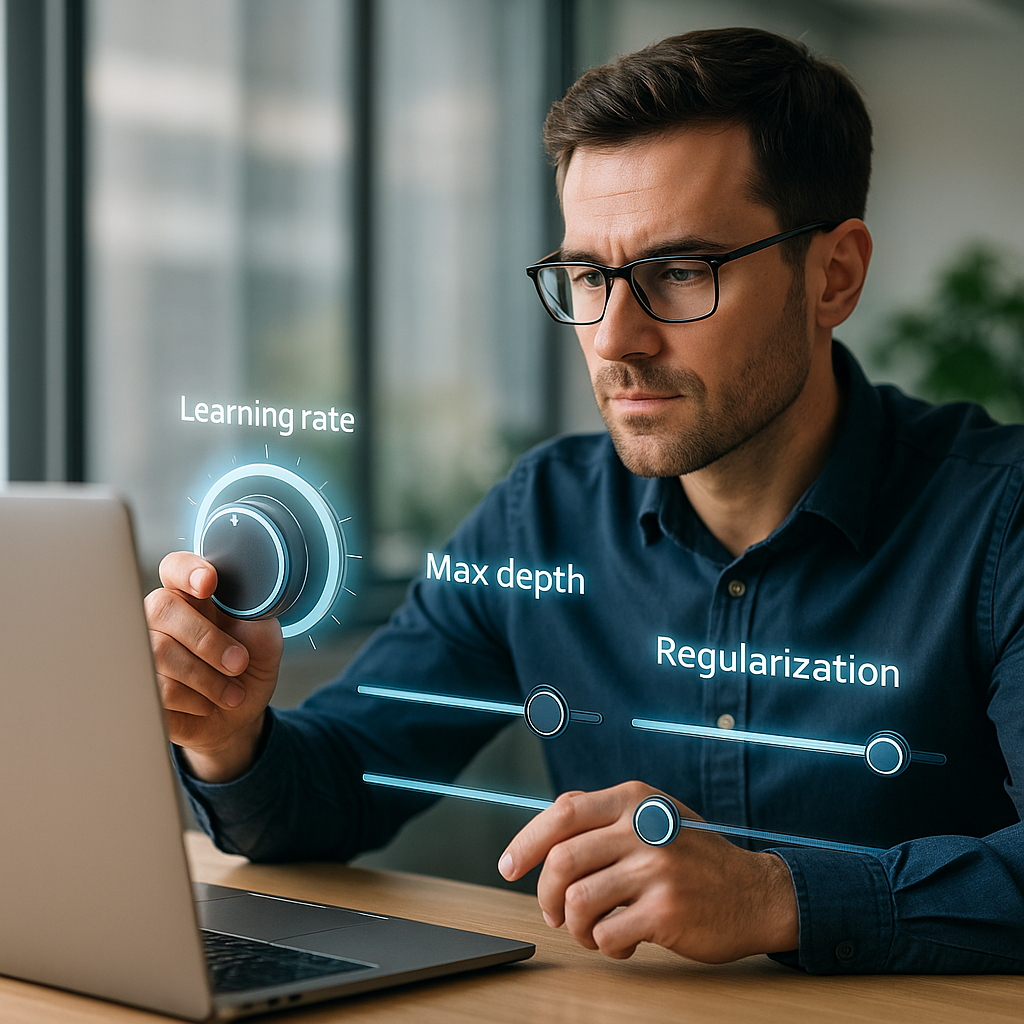
In machine learning, hyperparameters are the settings we choose before training a model think of them as the oven temperature and baking time in a recipe. Getting these “knobs” right can dramatically improve performance, while poor choices lead to slow learning or overfitting. In business analytics, well-tuned models can drive better forecasts, smarter customer segmentation, and optimized operations. This post distills key concepts around hyperparameters, explains three essential types, shares practical analogies, highlights automation tools, and points to resources for streamlined tuning.


What Are Hyperparameters and Why They Matter

Hyperparameters govern how a model learns from data. Unlike model parameters (e.g., neural network weights) learned during training, hyperparameters are set by data scientists in advance. They influence:

  • Learning behavior: How quickly or cautiously a model updates.

  • Model complexity: How flexible or constrained its form becomes.

  • Generalization: Its ability to perform well on unseen data.

In business contexts such as forecasting sales, predicting churn, or optimizing supply chains hyperparameter choices can mean the difference between actionable insights and misleading outputs. A poorly tuned model might underfit (missing important patterns) or overfit (capturing noise as if it were signal). Thoughtful tuning helps ensure robust, reliable predictions that align with real-world decision-making.


Three Core Hyperparameters Explained

  1. Learning Rate

    • What it does: In algorithms using gradient descent (e.g., neural networks, gradient boosting), the learning rate determines the step size when adjusting model parameters to reduce error.

    • Risks: Too large a rate can cause erratic updates that overshoot optimal solutions; too small slows training, possibly trapping the model in suboptimal states.

    • Business example: For a churn prediction neural network, an appropriate learning rate helps the model converge efficiently without jumping around, balancing speed and stability. Typical starting values range from 0.001 to 0.1, but experimentation (and often automated search) is needed to find the sweet spot.

  2. Max Depth

    • What it does: In tree-based methods (decision trees, random forests, gradient boosting), max depth caps how many splits a tree can make. This directly controls complexity.

    • Risks: A shallow tree may underfit, ignoring subtle patterns; an overly deep tree risks memorizing training data (overfitting), harming generalization.

    • Business example: When segmenting customers for targeted marketing, a depth set too low might overlook niche but valuable segments; set too high, the model might tailor segments so narrowly that they don’t generalize to future customers. Balancing depth (often between 3 and 10) helps maintain interpretability and predictive power.

  3. Regularization Strength

    • What it does: Applies a penalty to overly complex models. In linear models, terms like alpha (in Ridge/Lasso) or C (in SVMs) shrink coefficients toward simpler solutions.

    • Risks: Excessive regularization can underfit by oversimplifying; too little allows overly complex fits that capture noise.

    • Business example: For financial forecasting, strong regularization prevents the model from chasing random fluctuations in historical data, improving stability on future outcomes. In Lasso regression, a well-chosen alpha may zero out irrelevant features, aiding interpretability for stakeholders.


A Real-World Analogy

Consider teaching someone to ride a bike:

  • Learning rate is akin to how firmly you guide their balance each time they wobble too forceful and they fall; too timid and progress stalls.

  • Max depth resembles the amount of instruction at once overloading them with steps vs. oversimplifying guidance.

  • Regularization strength mirrors the use of training wheels too much reliance and they won’t learn balance; too little too soon and they risk crashes.

Just as finding the right balance helps the learner ride confidently, tuning hyperparameters steers ML models toward reliable performance.


Automating Hyperparameter Tuning

Manual grid search or random search can be time-consuming. Modern platforms offer automated optimization:

  • AWS SageMaker Automatic Model Tuning: Runs distributed hyperparameter searches using strategies like Bayesian optimization, freeing data teams from manual tweaking.

  • Google Vertex AI Vizier: Provides built-in support for hyperparameter tuning with various search algorithms.

  • Ray Tune: An open-source library enabling scalable hyperparameter search across frameworks, with early stopping and support for algorithms like Bayesian optimization or ASHA.

Automating searches lets teams focus on framing problems and interpreting results rather than manual parameter sweeps. In production settings for example, a logistics firm optimizing route models this speeds up experimentation and can lead to more effective configurations.


Emerging Trends in Tuning Techniques

  • Transfer-Based Tuning: Reusing hyperparameter insights from smaller models or related tasks to accelerate tuning for larger networks. Recent discussions highlight methods like μ-Param or μTransfer for neural nets, reducing compute costs.

  • Bayesian Optimization & Beyond: Compared to brute-force grid search, Bayesian methods (e.g., through libraries like KerasTuner or Optuna) intelligently explore parameter spaces, often finding better results in fewer trials.

  • Early Stopping & Multi-Fidelity Methods: Algorithms that allocate resources adaptively evaluating many configurations briefly and focusing on promising ones improve efficiency, especially when training models is expensive.

Staying current with these techniques helps analytics teams optimize resource use and model quality.


Practical Steps for Business Analysts

  1. Identify Key Hyperparameters: For your chosen algorithm, list the most influential settings (e.g., learning rate, tree depth, regularization).

  2. Set Reasonable Ranges: Based on prior experience or literature, define search boundaries (e.g., learning rate from 1e-4 to 1e-1).

  3. Leverage Automation: Use cloud or open-source tuning tools to run experiments, tracking metrics like validation loss or AUC.

  4. Monitor and Interpret: Examine results for patterns (e.g., too high learning rates leading to unstable losses). Validate top configurations on hold-out data.

  5. Document & Deploy: Record chosen hyperparameters, the tuning process, and performance outcomes. Integrate the tuned model into production pipelines with monitoring to detect drift over time.


Recommended Resources


Conclusion

Hyperparameter tuning is a pivotal step in crafting effective machine learning solutions for business. By understanding core settings like learning rate, max depth, and regularization strength and leveraging automation and advanced search methods teams can build models that generalize well and drive actionable insights. Start with clear problem framing, use reasonable search boundaries, and harness tools such as AWS SageMaker, Vertex AI, or Ray Tune to streamline experimentation. With the right tuning strategy, models become powerful assets in predicting trends, optimizing operations, and ultimately delivering business value.

The Psychology of “Holy Sh*t, That’s Huge”: Why Oversized Marketing Works

Person seeing big cup


Why Monumental Marketing Grabs the Mind

People instinctively notice things that deviate drastically from everyday scale. Encountering an object far larger or smaller than expected interrupts our automatic mental routines and sparks curiosity. This “cognitive disruption” compels attention in an era of constant distractions marketingmonk.so. In marketing, oversized installations exploit this effect: they break the visual pattern of daily life, creating a momentary pause that brands can leverage.


Built for the Share Economy

In today’s smartphone-driven world, physical spectacles double as content generators. A striking giant prop invites onlookers to grab their phones, snap photos or videos (often posing alongside for scale), and share on social platforms. Each post becomes free promotion, as users willingly amplify the stunt to their networks. For instance, IKEA’s colossal Frakta bag wrap in London drew visitors to photograph and post their experiences, multiplying reach far beyond paid advertising reutersconnect.com. Such installations transform the audience into voluntary brand advocates, generating authentic buzz.


Context Is King: Aligning Scale with Story

Not all supersized ideas resonate. The most impactful oversized activations resonate with existing brand narratives or emotional ties. Marks & Spencer’s large-scale Percy Pig sculpture atop a store leveraged nostalgia for a beloved icon, amplifying positive associations rather than feeling arbitrary spurcreative.co.uk. Similarly, any enlarged replica must reflect brand values or promise: an absurdly large product makes sense only if it underscores the intended message (e.g., abundance, comfort, playfulness). If scale feels unmoored from brand identity, the stunt risks appearing hollow.


Loud Over Subtle: A Necessary Shift?

Classic understated commercials or cryptic hints can be elegant, but in a landscape saturated by thousands of messages daily, subtlety often goes unnoticed. Oversized installations act like a megaphone: overt, unpretentious, and memorable. They declare plainly, for example, “We craft exceptional coffee here’s a giant cup to prove it.” In many contexts, this candid spectacle cuts through clutter more effectively than nuanced campaigns. Brands must decide when boldness serves their audience and objectives better than quiet sophistication.


One-Time Investment, Long-Term Echo

Creating a large-scale installation can require a hefty upfront outlay, yet the earned media often dwarfs what equivalent paid campaigns achieve. Each social share, article, and mention adds up to widespread exposure at no extra cost. For example, IKEA’s oversized bag installation likely surpassed numerous conventional ads in total reach and longevity. Such installations can become landmarks or talking points lasting well beyond the launch period. To gauge impact, brands can use social-listening tools to tally mentions and estimate the equivalent paid ad budget needed for similar impressions linkedin.com.


Avoiding the Copycat Trap

As more brands adopt supersized activations, novelty wanes. Simply enlarging a product loses efficacy if everyone does it. The future lies in deepening the experience: adding interactive elements, narrative layers, or surprise twists. For example, collaborations that allow visitors to engage inside or around the installation—rather than merely photograph it sustain interest. Monitoring early engagement metrics (foot traffic, shares per visitor, sentiment) helps determine whether to enhance or pivot the experience.


Lessons for Smaller Players

Big budgets aren’t essential to play with scale. Even modest brands can create “larger-than-life” moments that resonate. A local café might install a giant coffee cup prop near a busy pedestrian route, inviting selfies and social mentions, at a fraction of major brand costs. Key steps: ensure the concept fits brand personality and audience expectations; design for easy sharing (branded hashtags, simple interactive prompts); and measure outcomes via basic analytics (e.g., track footfall changes, hashtag usage, or short-term sales lift). When scale aligns with a delightful idea, even small activations can punch above their weight.


Evolving the Spectacle: Beyond Physical Size

As oversized props become commonplace, maintaining the “wow” factor demands innovation. Future directions include:

  • Interactive Layers: Integrating AR elements so visitors can scan the installation for digital experiences.

  • Temporal Pop-Ups: Short-lived monuments that appear unexpectedly and vanish, preserving novelty.

  • Gamified Urban Interactions: Turning public spaces into participatory playgrounds (e.g., scavenger hunts tied to installations).
    Brands piloting lightweight experiments can track engagement data (both on-site interactions and online shares) to refine their approach and keep wonder alive.


Measuring Earned Media Against Traditional Spend

To compare experiential buzz with conventional advertising:

  1. Quantify Mentions & Reach: Use social-listening platforms to count posts referencing the installation and estimate aggregate impressions via contributors’ follower counts.

  2. Estimate Equivalent Ad Value: Calculate the paid budget that would be required to reach a similar audience size and frequency.

  3. Assess Engagement Quality: Evaluate sentiment and depth of interactions (comments, shares), recognizing that authentic UGC often outperforms polished ads in credibility.

  4. Track Conversions: Incorporate trackable calls to action (e.g., unique promo codes, QR-driven landing pages) to measure direct outcomes.

  5. Long-Term Recall: When feasible, conduct informal surveys or brand-lift studies to gauge lasting awareness or affinity shifts.


Fostering Genuine Connections

Oversized stunts succeed when they evoke emotions wonder, nostalgia, delight rather than merely shock. Tapping into existing emotional bonds with brand icons or values amplifies impact. Social media then transforms these physical experiences into expansive organic campaigns, as users share moments that feel novel and enjoyable. Measuring the ripple effects from immediate shares to longer-term brand recall helps validate investment and guide future activations.


Concluding Thoughts: Wonder as Currency

In a world flooded by marketing messages, creating genuine moments of surprise and delight remains a powerful strategy. Oversized props aren’t about literal scale alone but about instilling a sense of wonder. Even without building a gigantic replica, brands can embrace this mindset: design experiences that disrupt routine, resonate emotionally, and invite sharing. When executed thoughtfully aligned with brand identity and measured against clear objectives these moments can deliver outsized returns in attention, engagement, and lasting memory.

References & Suggested Links:

The Art of the Tease: What Makes a Movie Trailer Truly Unforgettable?

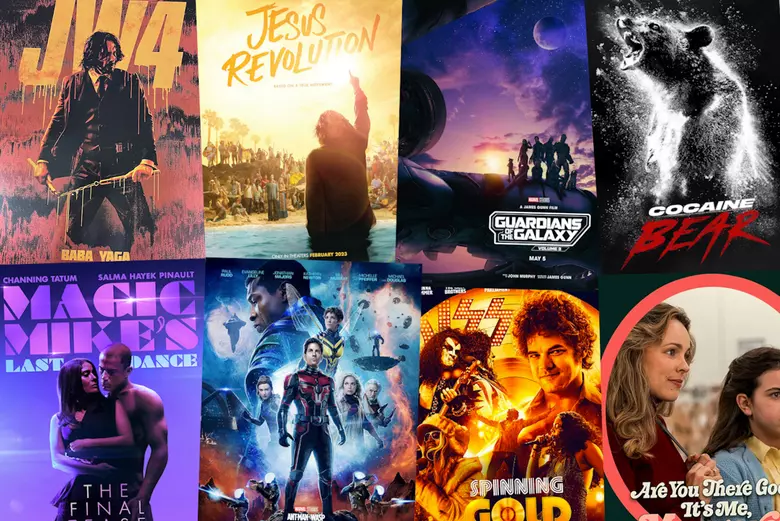
movie poster grid


Have you ever walked out of the theater humming a tune from a trailer or found yourself replaying a teaser on YouTube long after the credits rolled? You’re not alone. Even in the age of endless streaming and social-media scrolls, a great trailer still wields serious marketing magic. In fact, sisters Monica and Evelyn Brady co-founders of the Golden Trailer Awards have spent the last 25 years celebrating the craft behind those two-minute mini-movies that convince us to open our wallets (or at least hit “Add to Watchlist”).

After interviewing the Bradys, veteran trailer editor Benedict Coulter, and digging into industry trends, I’ve distilled the key ingredients that turn a simple preview into an unskippable cinematic appetizer. Whether you’re a filmmaker, marketer, or just a die-hard movie buff, here’s what you need to know.


1. Keep It Tight, But Make It Count

Sweet spot: roughly 90 seconds to 2 minutes.
Today’s audiences have razor-short attention spans, so any teaser that creeps past the two-minute mark risks feeling long in the tooth. Compare that with the sprawling, voice-of-God promos of the 1970s (some ran six or seven minutes!), and it’s clear the pacing game has changed.

“If you go back and watch those ’70s trailers, you’re crawling out of your skin,” Monica Brady jokes.

Digital platforms do allow for extended cuts or “special looks,” but the first bite has to be snack-sized just enough to spark curiosity without giving the plot away.


2. Hook the Heart Before the Head

Think of a trailer as a first date: you’re not rattling off your life story, you’re creating intrigue. The Bradys swear by an emotional anchor one unforgettable image, line of dialogue, or needle-drop that makes viewers feel something immediately. That feeling sticks far longer than a bullet-point list of plot exposition.

  • For action flicks: A pulse-pounding stunt or perfectly timed beat drop.

  • For intimate indies: A lingering close-up, a whispered confession, a single relatable moment.

  • For horror: A slow visual reveal that leaves the real scare off-screen (our imaginations fill in the blanks).


3. Let the Music Do the Heavy Lifting

If trailers were cocktails, music would be the secret bitters that tie the whole flavor profile together. Evelyn Brady calls the auditory recall of a great track “marketing gold.” The first three notes of the right song can raise goosebumps faster than any explosion. Veteran producer Jerry Bruckheimer built entire campaigns around that principle just think of the Top Gun anthem and how it primes you for speed and sky-high adrenaline before Tom Cruise even removes his helmet.

Insider tip: Modern editors often experiment with slowed-down pop hits or moody orchestral covers. Familiar songs in unfamiliar arrangements create instant recognition plus fresh intrigue.


4. Upend Expectations (Just Enough)

Studios still rely on tried-and-true trailer “formulas” because news flash they work. But the trailers people gush about? Those often zig when everyone else zags.

“If seven trailers follow the same blueprint and one breaks the rules, guess which one you’ll remember?” Coulter says.

Maybe it’s a fake-out jump scare, an unexpected tonal shift, or a mid-teaser mic drop that reveals the real genre twist. The key is balancing risk with clarity; surprise us, but don’t confuse us.


5. Respect the Audience—Don’t Spoil the Payoff

Nothing torpedoes excitement faster than a preview that spills the movie’s third-act twist. While marketing departments sometimes demand “more plot, more plot,” top editors push back, arguing the movie’s best moments belong on the big screen, not in your feed.

Evelyn’s rule of thumb: If the entire story fits in two and a half minutes, maybe the feature itself needs another revision pass.


Why It Matters (Far Beyond the Box Office)

Trailers aren’t just ads they’re cultural touchpoints. An unforgettable teaser can:

  • Catapult a micro-budget indie into mainstream conversation (think Whiplash or Everything Everywhere All at Once).

  • Define a franchise’s identity before the opening weekend (Deadpool’s sardonic red-band trailers basically wrote the character’s cinematic rulebook).

  • Spark viral fandomb: hello, social-media reaction videos, mash-ups, and Easter-egg breakdowns.

And on a human level? A great trailer gives us something intangible: anticipation. That giddy, seat-shuffling feeling that reminds us why we fell in love with movies in the first place.


Takeaways for Creators and Marketers

  1. Lead with emotion. Hook the viewer’s gut before their brain.

  2. Trim the fat. Respect modern attention spans (aim for two minutes or less).

  3. Choose music with purpose. The first few notes should set an unmistakable mood.

  4. Dare to deviate. A dash of novelty makes your teaser pop in a sea of sameness.

  5. Leave them wanting more. If you spoil the finale, you squander the ticket sale.

Whether you’re cutting your first indie trailer in a cramped editing suite or green-lighting a mega-budget marketing push, remember: trailers are tiny works of art. When designed with care, they don’t just preview a story they become part of the story we tell about going to the movies.

So next time you catch yourself humming that catchy trailer track on the drive home, thank the editors, musicians, and marketing mavericks who turned two short minutes into a lasting memory and maybe, just maybe, sold you your next favorite film.

From AI Income Engines to India’s Hallyu Phenomenon: Unlocking Digital and Cultural Trends!

walk way

From AI Income Engines to India’s Hallyu Phenomenon: Unlocking Digital and Cultural Trends!

My introduction to Korean culture began with my sister’s BTS and Blackpink playlists. I never jumped on the K-drama bandwagon until I saw When Life Gives You Tangerines. Its storytelling and visuals won me over instantly. Now I’m deep into Reply 1988, and I’m hooked!

Though I was late to Korean TV, I’ve always been a fan of the food. Nissin noodles, spicy Buldak ramen, and Knorr’s Korean soups are staples. Just yesterday I spotted giant billboards promoting McDonald’s and Burger King’s Korean menus proof the craze is everywhere.

From music and dramas to beauty trends, fashion, food, and language, Korean culture is weaving into daily life worldwide. In India, the Hallyu wave started quietly in the Northeast where cultural ties to East Asia made K-pop and K-dramas feel familiar. But with the rise of affordable smartphones and data after 2010, the phenomenon spread to metros and beyond.


Key moments fueled the surge:

  • PSY’s “Gangnam Style” in 2012 shattered language barriers and introduced K-pop globally.

  • The pandemic lockdowns gave everyone time to binge Korean content, with Netflix championing shows like Squid Game.

  • Local streaming platforms (MX Player, ZEE5) began offering dubbed and subtitled K-dramas.

  • Fan-driven Instagram pages and online communities turned Korean culture into something personal and aspirational.

How Hallyu Is Reshaping Indian Markets

Fashion & Beauty

  • Terms like “glass skin,” “double cleansing,” and “snail mucin” are now part of mainstream Indian skincare.

  • E-commerce sites (Nykaa, Amazon, Tira) dedicate entire sections to K-beauty, often tailoring products for local needs.

  • Korean streetwear oversized layers, bucket hats, preppy styles has infiltrated Gen Z wardrobes, influencing India’s fashion influencers.

Food & Beverage

  • Korean cuisine has exploded beyond niche restaurants: you’ll find local QSRs serving Korean fried chicken and cloud kitchens delivering ramen in Tier II and III cities.

  • Instant Korean noodles line supermarket aisles; bubble tea chains are popping up nationwide.

  • Indian brands have even launched “K-flavored” snacks and sauces to ride the wave.

Language & Education

  • Learning Korean is booming on platforms like Duolingo, and universities now offer it as an elective.

  • Indian YouTubers teach Korean with cultural context, turning language study into a fan-driven experience.

Retail & Merchandising

  • Dedicated K-pop and K-drama merchandise photo cards, plushies, posters has gone mainstream on Amazon, Flipkart, and Meesho.

  • Licensed character lines (LINE Friends, BT21) harness fan loyalty and introduce fresh visual styles.

Experiential & Community Marketing

  • Fans crave real-world connection: events like Rang De Korea draw huge crowds, and themed restaurants like Delhi’s Kori’s offer immersive photo booths that spread brand awareness organically.


Success Stories

Nykaa’s K-Beauty Launch
Nykaa’s dedicated K-beauty store skyrocketed Korean brand sales by 2.5× in 2024   bringing The Face Shop, Innisfree, Laneige, and more into Indian shoppers’ carts. Their educational content and expert demos convinced consumers that K-beauty was here to stay.

Quench Botanics: Localizing K-Beauty
Quench Botanics blends Korean skincare principles with formulas made for Indian skin and climate. By partnering with influencers, spotlighting ingredients, and pricing thoughtfully, they’ve turned global trends into homegrown success.

GOPIZZA & Boba Bhai: Korean Flavors for Indian Streets

  • GOPIZZA offers speedy, personal-size Korean-style pizzas for urban lifestyles.

  • Boba Bhai surprised Shark Tank India with their bubble tea and Korean-inspired burgers, capturing the hearts of India’s 14 million K-pop fans with vegan options and inventive desserts.

These brands prove that when businesses adapt Hallyu’s spirit mixing authenticity, speed, and localized flair they can tap into a cultural movement that’s only growing stronger.

Unlocking the Power of Empathy, Story and Connection: Lessons from Seth Godin’s This Is Marketing

person reading a book

Marketing isn’t about shouting the loudest; it’s about whispering the right story to the right person. In This Is Marketing, Seth Godin reframes marketing as an act of generosity and service. Here are some of the most compelling ideas he shares and what you can take away for your own work.


1. Find Your “Smallest Viable Audience”

What Godin Says:

“You can’t be everything to everybody. Instead, decide whom you’re for and build a product and story that resonates deeply with that group.”

Why It’s Powerful:

  • Shifts focus from mass appeal to meaningful connection

  • Encourages authenticity: you serve fewer people better

  • Builds word-of-mouth momentum as delighted customers become evangelists

Your Takeaway:

  • Define your niche in human terms interests, values, identity

  • Craft messaging that speaks directly to their needs and aspirations

  • Resist the temptation to water down your offer for the sake of “broader” appeal


2. Lead with Empathy and Story

What Godin Says:

“People like us do things like this.”

Why It’s Powerful:

  • Stories bind us together; they help customers see themselves in your narrative

  • Empathy lets you anticipate objections and speak to real fears or desires

  • Shared identity (“people like us”) creates a sense of belonging

Your Takeaway:

  • Use customer interviews to uncover the stories they tell themselves

  • Position your product or service as the missing chapter in their narrative

  • Maintain consistency across every customer touchpoint (website, email, social media)


3. Embrace “Permission Marketing”

What Godin Says:

“The best marketing doesn’t feel like marketing.”

Why It’s Powerful:

  • Breaks with interruptive tactics (pop-ups, cold calls) that annoy today’s savvy consumer

  • Builds trust over time by delivering valuable content before pitching an offer

  • Turns subscribers into loyal fans who eagerly await your next message

Your Takeaway:

  • Offer genuine value (tips, insights, stories) in exchange for attention or contact details

  • Respect customers’ inboxes: send only what you’d be excited to receive

  • Nurture relationships with a predictable cadence email, social media, events


4. Create and Amplify Tension

What Godin Says:

“Marketing is the generous act of helping someone solve a problem they’ve come to you to solve.”

Why It’s Powerful:

  • Tension (the gap between where people are and where they want to be) is the engine of all change

  • A well-defined tension makes your solution feel urgent and essential

  • Without tension, even the best products can languish unnoticed

Your Takeaway:

  • Identify the emotional or practical pain point your audience experiences daily

  • Frame that pain point vividly in your messaging don’t shy away from discomfort

  • Position your product as the bridge from “now” to “next”


5. Focus on Status Change

What Godin Says:

“People buy status they want to be seen differently by themselves and by others.”

Why It’s Powerful:

  • Status signals (“I’m a serious baker,” “I’m an eco-warrior”) drive purchasing decisions

  • Marketing that elevates customers’ status resonates at a deeper emotional level

  • Products with clear status benefits create enthusiastic brand advocates

Your Takeaway:

  • Ask: “What new badge of honor does my product confer?”

  • Reflect that status in your branding, packaging, and community language

  • Celebrate customers publicly to reinforce the perception of prestige


6. Marketing Is Service, Not a Zero-Sum Game

What Godin Says:

“Marketing done right is making change happen for the better.”

Why It’s Powerful:

  • Reframes marketing from manipulation to mutual benefit

  • Positions you as a trusted guide rather than a faceless seller

  • Encourages ethical choices and long-term thinking

Your Takeaway:

  • Always ask: “How does this help my customer?”

  • Align your marketing actions with your core values transparency, integrity, generosity

  • Measure success not just in sales, but in customer outcomes and community impact


Bringing It Home: What You Can Learn

  1. Narrow Your Focus
    You’ll achieve more by serving fewer people better.

  2. Speak Their Language
    Empathy and story transform prospects into passionate raving fans.

  3. Build Trust First
    Invest in permission marketing give before you ask.

  4. Sell Transformation
    Highlight the tension your product resolves and the status it confers.

  5. Serve, Don’t Trick
    When marketing is an act of service, you cultivate loyalty and make a lasting difference.


Whether you’re launching a side hustle, growing a nonprofit, or leading a global brand, This Is Marketing offers a blueprint for change-centric, humane marketing. Its lessons remind us that at its heart, marketing is an invitation: to join a community, solve shared problems, and elevate each other’s stories.

How Days Beer Tapped Into the Mindful Drinking Movement and Built a Bold, Authentic Brand.

cans line up

🍺 The Rise of Days Beer: A Mindful Twist on a Classic Ritual For many, beer marks their first sip into the world of alcohol.

Recently though, the market has been bubbling with fruit beer alternatives beverages that resemble beer in look and feel but come with zero alcohol.

This shift has been largely fueled by younger consumers rethinking their relationship with alcohol, even as they continue reaching for a beer during social moments.

Enter Days Beer a UK-based alcohol-free beer company founded in 2020 by Mike Gammell and Duncan Keith.

Riding the Mindful Drinking Wave
At the heart of Days Beer lies a powerful cultural undercurrent: the mindful drinking movement.

Brewed in Scotland with locally sourced ingredients, Days doesn’t try to mimic beer by being watered-down it is beer, just without the alcohol or hangover.

The brand is built around guilt-free indulgence, offering the full experience taste, ritual, and vibe without any negative aftereffects.

So how did Days carve out a strong presence in a market dominated by old-school giants and skeptical consumers?

Let’s dive in.

Branding That Sticks The core insight behind Days:  you shouldn’t have to choose between your health and having a beer.

Mike and Duncan set out to create a brand that delivers the full beer experience from the taste and ritual to the satisfaction without alcohol.

What makes them stand out is their authenticity. The founders made their own personalities a part of the brand from day one, giving it a human, relatable feel.

And there’s zero pretension here. Days isn’t trying to be a fancy craft beer, it’s just a smart, clean alternative that fits seamlessly into real lives.

Importantly, the brand isn’t just for sober folks or for “Dry January.” It’s designed to blend into everyday routines without disrupting them.

Psychology-Driven Positioning Where traditional alcohol brands promote escapism, Days flips the narrative it’s about enhancing your life.

They also walk the talk B-Corp certified, with 2% of profits donated to mental health initiatives through their “Days Duty” program.

Who’s Drinking Days?
Their main consumer base? Health-conscious Millennials and Gen Z.

These are people who read nutrition labels, track their steps, and are tuned into their mental well-being.

Many fall into the “sober curious” camp experimenting with reducing alcohol intake without giving it up completely.

You’ll also find athletes, creatives, wellness enthusiasts, and productivity-focused professionals in their tribe.

For some, it’s about improving sleep or avoiding the post-drink blues. For others, it’s about clarity and hitting personal milestones.

Days doesn’t preach sobriety it offers a smarter alternative, giving people room to explore their own reasons for cutting back, including that all-too-familiar “hangxiety.”

Facing the Competition
Days is up against names like Beneficial Beer, Nirvana Brewery, and Beavertown Brewery, along with industry giants like Northern Monk, and Heineken’s alcohol-free line.


Here’s how they stack up:

Aspect

Days Brewing

Competitors (e.g. Northern Monk)

Leaders (Heineken, AB InBev)

Market Position

Fastest growing low/no-alcohol brand in the UK

Established low-alcohol products

Broad portfolio, global presence

Growth Rate

160% retail sales growth in 2024

Lower growth rates

Stable growth, focused on volume

Distribution

Major UK supermarkets + Majestic

Supermarkets & pubs

Extensive international distribution

Marketing

Viral TikTok, witty OOH campaigns

Traditional & digital marketing

Massive budgets, broad reach

Products

0.0% Pale Ale & Lager with premium ingredients

Varied alcohol-free beers

Wide range with alcohol-free options

Brand Values

B-Corp certified, mental health focus

Varies

CSR programs

The Marketing Mix

Product:

Days founders spent a year refining a 0.0% alcohol beer using traditional methods. The final product uses premium barley and fresh water from the Lammermuir Hills. The flavor profiles include Pale Ale and Lager, both available in cans and bottles and yes, they fit into a pint glass, preserving the familiar ritual.

Price:

Days leans premium, focusing on value through quality and connection rather than undercutting competition. Pricing adjusts slightly by setting sharp but premium prices in supermarkets and online, a bit higher in pubs and bars.

Place:

Their omnichannel distribution includes their website, Amazon, and a subscription model with a 20% lifetime discount. They partner with Huboo for fulfillment and have strong retail visibility with Tesco, Ocado, and even Wagamama. Their Majestic Wine partnership (200+ stores) especially pushes their Pale Ale.

This smart retail network helped Days drive a 160% YoY sales increase in 2024.

Viral Content = Real Sales

Social Media

Days nailed TikTok.

Rather than just being there, they blended in while standing out with relatable content, authentic storytelling, and no salesy fluff.

They brought founders and employees into the spotlight, creating a human connection.

When the #TubeGirl trend exploded, Days asked followers if they wanted to see the founders do it. When they did, it blew up:

20M+ views


53K+ new followers


432% spike in website traffic


Best-ever sales week at Tesco


All from a single viral video.


OOH (Out-of-Home)

Dry January is prime time but highly competitive.

Days went all-in with 31 unique messages one for each day across taxis, buses, tube stops, and digital screens throughout the UK.

Their central message?

“There are loads of reasons not to drink alcohol, but no reason not to drink beer.”

Emily Jeffery-Barret, Co-Founder, Among Equals

Final Thoughts: Why Days Wins

Days isn’t just selling a product, it’s selling a mindset.

In a category long ruled by legacy names and booze-fueled rituals, they’ve carved out a new path one powered by empathy, cultural awareness, and some seriously clever marketing.

 Key Takeaways (Screenshot This!)

  •  Lean into cultural shifts, not just demographics

  •  Build authenticity by spotlighting your team

  • Jump on viral trends fast (hello, TikTok!)

  •  Position the product around life moments, not just parties

  •  Sell satisfaction, not sobriety

Kill The Bug Inside You!!

Kill the Bug Inside You - "A Marketing Nightmare Turned Success"

The Incident: A Campaign Gone Wrong
In 2018, a well-known health supplement brand launched a digital campaign promoting its new probiotic product. The campaign targeted young professionals struggling with digestive issues, using the tagline “Kill the Bug Inside You.”

However, within hours of going live, the campaign faced unexpected backlash. Social media users misinterpreted the tagline, associating it with mental health struggles rather than gut health. Some accused the brand of being insensitive, while others found the message confusing. Hashtags like #MarketingFail and #InsensitiveBranding began trending.

The Redemption: Smart Crisis Management
The marketing team, realizing the mistake, took immediate action. They:

Acknowledged the confusion – The brand issued a public statement apologizing for the unintended interpretation.

Engaged the audience – Instead of deleting the campaign, they launched a follow-up with influencers explaining the real meaning behind the tagline.

Rebranded the message – A revised campaign shifted focus to “Kill the Bad Gut Bacteria, Feel Better Inside.”

Leveraged controversy – The buzz helped drive conversations about gut health, increasing website visits by 300% in a week.

The Outcome: A Viral Success
What started as a marketing disaster turned into a huge success. The revised campaign led to a 25% increase in sales, and the brand was praised for its quick response.

Lesson for Marketers:
Test taglines across different demographics before launch.

Monitor public sentiment and react quickly.

Turn negativity into an opportunity by engaging in honest communication.

Even the best marketers face “bugs” in their strategies. The key is to kill the bug inside before it ruins the campaign!

Burger King’s Marketing Strategy: The Art of Playful Rivalry

Founded in 1954 in Jacksonville, Florida, by James McLamore and David Edgerton, Burger King set out to popularize flame-grilled burgers. Originally named “Insta-Burger King,” the brand underwent early rebranding, dropping “Insta” to become the well-known Burger King. A major milestone was the introduction of the Whopper in 1957, priced at just 37 cents. This signature burger helped the brand stand out in an increasingly competitive fast-food industry.

Industry Overview and Marketing Tactics

The global fast-food industry is projected to hit $1,186.44 billion by 2032, with key players like McDonald’s, Wendy’s, Subway, and KFC. The franchise model has been a significant driver of success, allowing rapid expansion with minimal capital investment from parent companies. Burger King effectively leveraged this strategy, with only 50 of its 19,789 outlets company-owned, while the rest operate as franchises.

Burger King follows industry best practices, such as:

  • Family-Friendly Advertising: Targeting families to build trust.
  • Discounts & Loyalty Programs: Incentives like Buy 1 Get 1 Free drive repeat business.
  • Delivery Partnerships: collaborating with Uber Eats, Zomato, and Swiggy for accessibility.
  • Strategic Locations: Positioning in malls, multiplexes, and high-footfall areas.
  • App-Based Ordering: Encouraging digital engagement and repeat purchases.

Burger King’s Entry into India

Burger King entered India in 2014, partnering with Everstone Capital for its franchise operations, while McDonald’s had already been in the market for 18 years. Understanding the importance of adaptation, Burger King localized its strategy by:

  • Introducing a Vegetarian Menu: Items like Paneer King and Tikki Twist cater to India’s large vegetarian demographic.
  • Focusing on Price Sensitivity: Budget-friendly meal combos made the brand accessible to cost-conscious consumers.
  • Adding Localized Flavors: Burgers like the Masala Whopper balanced global identity with Indian taste preferences.

This strategic approach helped Burger King become one of the fastest-growing fast-food brands in India.

Bold Marketing Campaigns

1. Whopper Detour

In 2018, Burger King used geofencing to offer a $0.01 Whopper to customers placing orders near a McDonald’s outlet. 

  • Impact:
    • 1.5 million+ app downloads
    • 3.3 billion impressions
    • 3x increase in mobile sales

2. Burn That Ad

A creative Augmented Reality (AR) campaign allowed customers to virtually “burn” McDonald’s ads via the Burger King app, earning a free Whopper in return. This gamified experience boosted engagement and brand recall.  

3. Moldy Whopper

To highlight its no artificial preservatives policy, Burger King launched a campaign featuring a Whopper rotting over 34 days. While controversial, it reinforced the brand’s commitment to natural ingredients, in contrast to McDonald’s famously non-decomposing burgers. 

4. Google Home of the Whopper

In 2017, a Burger King commercial triggered Google Home devices to read out Whopper descriptions from Wikipedia. Although Google quickly disabled the feature, the stunt went viral, showcasing Burger King’s innovative thinking. 

5. Stevenage Challenge

By sponsoring Stevenage FC, a lesser-known English football club, Burger King encouraged FIFA gamers to play with the team and earn branded rewards.

  • Club’s home jerseys sold out
  • Millions of eyes on Burger King’s branding in FIFA 20
  • User-generated content featuring top football stars

6. Net Neutrality Whopper

Burger King tackled the net neutrality debate by simulating tier-based pricing for Whoppers, mirroring the impact of unequal internet access. The campaign effectively simplified a complex issue for mass audiences.

Key Takeaways

Burger King’s bold, risk-taking marketing has cemented its position as a memorable brand. From leveraging local market insights to engaging audiences with unconventional ad campaigns, the company continues to push the boundaries of traditional advertising.


“Great marketing isn’t just about selling a product it’s about creating conversations, challenging norms, and leaving a lasting impression. Burger King proves that boldness, creativity, and a little playful rivalry can turn a brand into a cultural icon.”

Most of us associate Santoor with the ‘Santoor Mom’ ads:

But that was not the initial focus of the brand.

Santoor was launched by Wipro Consumer Care in 1985. 

Now, kitchen ingredients for beauty have been a norm in India for centuries. So, Santoor initially launched with a USP of a formulation that used turmeric and sandalwood.  In fact, the word Santoor comes from these 2 ingredients – ‘San’ from sandalwood and ‘toor’ (‘tur’) from turmeric.  Though the initial response was good, it was mostly attributed to early adopters. When the prices of Santoor hiked with rising costs of raw materials, consumers went back to their old soaps that cost less. 

Though they released advertisements to tackle this, awareness remained low.

-Repositioning strategy of Santoor 

-SWOT & competitor analysis

-Regional + rural focus

The repositioning strategy of Santoor:

When Santoor was launched, it was positioned as an Ayurvedic soap.

1988: Santoor Haldi Chandan Soap With traditional ingredients, it offered an alternative against brands like Lux and Pears. 

But the market already had brands with “natural is better” positioning, with brands like Medimix, Margo, and Mysore Sandal. With not much differentiation and almost no brand awareness, Santoor was struggling. The major problem with this positioning was the lack of emotional connect. 

Santoor offered a solution to a problem not many consumers were facing. And if the brand is not relatable, it’s not going to hit.

Now, in the mid-90s, a trend was observed among female consumers – they wanted to feel young in order to enhance their self image.  With globalisation, modernisation of traditional Indian homes, and the shift of a woman’s identity from only a  homemaker, it opened up new avenues to how women wanted to feel and be perceived. 

The brand noticed that there was no soap that directly addressed the skincare needs of older women. This aspirational segment was naturally wary of using a product that emphasized traditionality. 

Every beauty soap targeted either young women chasing movie-star beauty or families looking for an all-purpose product.

But what about Indian mothers? The ones who spent their lives taking care of their families but still wanted to look youthful?


That was an untapped market.


So, the brand implemented a repositioning strategy where they promised something every woman wanted – skin that looks younger.


“Younger-looking skin is not about how your skin looks. Nobody says soaps give me young skin. Young skin is an emotion; feeling young and thinking young is an emotion… It is not only about younger skin or looking beautiful, but also feeling young.”

In a society where women are often expected to age gracefully but not too quickly, Santoor positions itself as the subtle confidence boost that aligns with this mindset.

This positioning helped to relate emotionally and appeal to a broader market who was also willing to pay slightly higher for an aspirational value. 

They have continued with this positioning for more than 30 years now.


“In 2018, Santoor was also the second most sold soap brand in India!”

The developers of coupon browser extensions claim that these extensions are stealing their money. Will the Courts Reach a Consensus?

Affiliate marketing, a significant revenue stream for content creators and influencers, is currently facing legal challenges due to practices by certain coupon browser extensions. These extensions, such as PayPal’s Honey and Capital One Shopping, are accused of diverting commissions away from creators by overwriting their affiliate links during the checkout process.

Key Legal Issues:

  1. Affiliate Link Hijacking: Creators allege that these extensions replace their legitimate affiliate links with the extension’s own, thereby claiming commissions for sales they did not facilitate. This practice undermines the earnings of creators who rely on affiliate marketing for income.

  2. Last-Click Attribution Disputes: The controversy centers around the “last-click attribution” model, which awards the commission to the final referrer before a purchase. Extensions like Honey and Capital One Shopping are accused of exploiting this model by inserting themselves as the last click, thus capturing the commission intended for the original affiliate.

Recent Legal Actions:

  • Lawsuits Against PayPal’s Honey: Content creators have filed class-action lawsuits against PayPal, alleging that the Honey extension improperly claims affiliate commissions by overwriting original affiliate links. These lawsuits seek damages and changes to Honey’s affiliate practices.

  • Legal Action Against Capital One Shopping: Influencers have also sued Capital One, claiming its Shopping browser extension “stole” their affiliate commissions by replacing their cookies with its own, thereby taking credit for sales driven by the influencers’ efforts.

Implications for the Affiliate Marketing Industry:

These legal challenges highlight the need for clearer guidelines and ethical standards in affiliate marketing, especially concerning the use of browser extensions. The outcomes of these lawsuits could set significant precedents, potentially leading to stricter regulations and changes in how affiliate attributions are handled.

As the legal landscape evolves, it’s crucial for content creators, marketers, and companies to stay informed and ensure their practices align with emerging standards to protect their revenue and maintain trust within the industry.

Netflix’s Data-Driven Marketing Strategy.​

movie poster grid

Personalization 

Netflix uses data to personalize recommendations for each user, enhancing user engagement and increasing subscription retention. By analyzing viewing habits, Netflix customizes the homepage of each user with shows and movies tailored to their preferences, based on the content they’ve watched before, ratings, and the genre of content they consume.

A/B Testing

Netflix is known for running thousands of A/B tests every year. They test different elements of the user experience, from thumbnails for movies and shows to changes in the user interface, to see which variations lead to higher engagement. This helps them constantly improve their platform’s user experience.

Content Creation

Beyond marketing, Netflix uses data to inform its content strategy. The platform analyzes viewing trends, including which genres are the most popular and what time of day people are watching. This data helps Netflix decide what content to commission and which shows or movies are worth investing in. For example, they used data to create and promote House of Cards, which was a massive success.

Marketing Campaigns 

Netflix also uses data for creating targeted marketing campaigns. They segment their audience based on their preferences, watching behaviors, and even geographic locations. For instance, they might use specific content to target users in different regions, or they can promote shows based on popular viewing times or trending topics.

Success Story

Netflix’s use of data in marketing and content creation has been one of the key factors in its global success. With over 200 million subscribers, Netflix has set a standard for how brands can leverage data to enhance customer satisfaction, optimize marketing strategies, and grow their business. Their ability to personalize the viewer experience has played a critical role in building a loyal customer base and ensuring they remain one of the leaders in the streaming space.

Netflix’s approach showcases how data is not only crucial for understanding consumer behavior but also vital for creating better products and experiences, leading to sustained business growth.