


The Rise and Fall of MoviePass: Lessons for Marketers
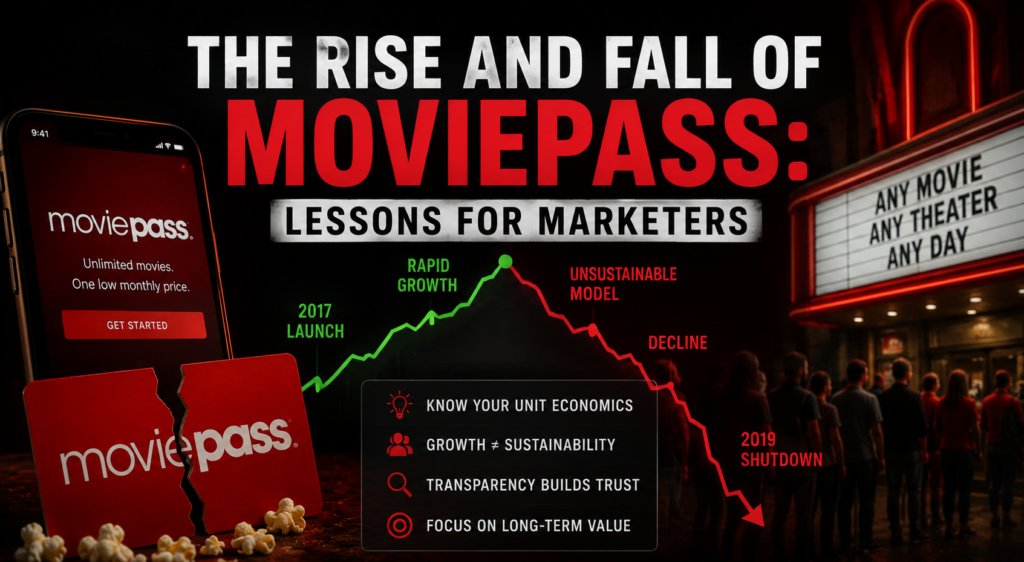
In the ever-evolving landscape of marketing, the story of MoviePass stands as a cautionary tale. Launched in 2017, MoviePass offered an irresistible deal: one movie ticket per day for just $9.95 a month. This groundbreaking offer created a massive wave of subscriptions, attracting over two million users within six months. However, this meteoric rise was followed by an equally dramatic fall, leading to the company’s collapse in 2019. Understanding the missteps of MoviePass is crucial for marketers today, especially as businesses navigate the challenges posed by disruptive pricing strategies and customer expectations.
The MoviePass saga is not merely about a failed business; it encapsulates vital lessons about aligning marketing promises with business realities. As we delve deeper into this case, we will uncover the key marketing mistakes made by MoviePass and how modern marketers can avoid similar pitfalls.
The Allure of an Irresistible Offer
The first major takeaway from the MoviePass experience is the power of an irresistible offer. The company’s $9.95 subscription was not just a price point; it was a marketing phenomenon that generated buzz and viral word-of-mouth. It was so compelling that it required little traditional advertising subscribers did the marketing for MoviePass by sharing their excitement on social media and news outlets.
However, this success also highlighted a significant flaw: the offer was unsustainable. MoviePass paid theaters the full ticket price, leading to massive losses with every transaction. Marketers must recognize that while attractive offers can drive customer acquisition, they must be backed by a feasible business model. A marketing strategy must consider not only how to attract customers but also how to retain profitability.
The Dangers of Adverse Selection
One of the critical miscalculations by MoviePass was its assumption about customer behavior. The company believed that most subscribers would be light users, taking advantage of the subscription only a few times a year. In reality, the offer attracted avid moviegoers who utilized the service frequently, leading to higher operational costs than anticipated. This phenomenon, known as adverse selection, occurs when an offer disproportionately attracts customers who are more costly to serve.
For contemporary marketers, this illustrates the importance of understanding customer segments and their behaviors. When designing offers, it’s essential to conduct thorough market research to anticipate how different customer groups will respond. Building customer personas can help businesses tailor their marketing strategies to attract the right customers, thereby avoiding adverse selection pitfalls.

The Consequences of Broken Promises
As financial pressures mounted, MoviePass began altering its service terms, imposing blackout dates and removing popular movies from its platform. These changes eroded consumer trust and loyalty, and the company’s once-strong brand image suffered immensely. When customers feel misled, the damage to brand reputation can be irreparable.
This scenario serves as a stark reminder for marketers: trust is an invaluable asset. Maintaining transparency with customers and delivering on promises is crucial. If companies must pivot or adjust their offerings due to unforeseen circumstances, clear communication is essential to preserve customer relationships. Brands that prioritize honesty and transparency are more likely to build lasting loyalty and mitigate the risk of backlash.

Scaling Without a Sustainable Model
MoviePass’s ambition to scale rapidly ultimately contributed to its downfall. The company believed that by amassing a large user base, it could leverage data and negotiate better terms with theaters. However, it failed to establish a sustainable revenue model, which only multiplied its financial losses.
For marketers, this highlights the importance of aligning growth strategies with sustainable practices. When planning for scale, businesses should develop robust financial models that account for potential customer usage patterns and the costs associated with fulfilling customer demand. A well-thought-out growth strategy should focus not only on acquiring customers but also on ensuring that the business can effectively meet their needs without jeopardizing profitability.
Key Takeaways for Today's Marketers
The story of MoviePass is a rich source of lessons for modern marketers. First, while attractive offers can drive initial success, they must be sustainable. Second, understanding customer behavior is crucial to avoid adverse selection. Third, maintaining transparency is essential for building trust, especially when changes to service occur. Finally, scaling a business requires a sustainable model that aligns customer demand with operational capabilities.

MY PERSPECTIVE:
As a professional focused on marketing analytics and brand strategy, the MoviePass case underscores the necessity of integrating marketing efforts with business realities. Marketers need to leverage data to understand their customer base deeply, ensuring that their strategies align with not only customer desires but also the financial health of the business. Implementing rigorous analytics will help in modeling scenarios that predict customer behavior and the impact of offers on profitability.